
Somatic Yoga for Tension Release: 5 Micro-Movements to Rewire Muscle Memory
October 3, 2026 • 5 min read • By Manoj Kumar

When chronic physical stress, desk slouching, or emotional fatigue locks your neck, shoulders, and lower back into persistent stiffness, aggressive stretching often makes the tightness worse. Practicing somatic yoga for tension release shifts the focus from forcing flexibility to neuromuscular education. By engaging the brain’s sensorimotor cortex through gentle, conscious micro-movements, somatic movement dissolves subconscious muscular contractions at their neurological root rather than merely pulling on tight fibrous tissues.
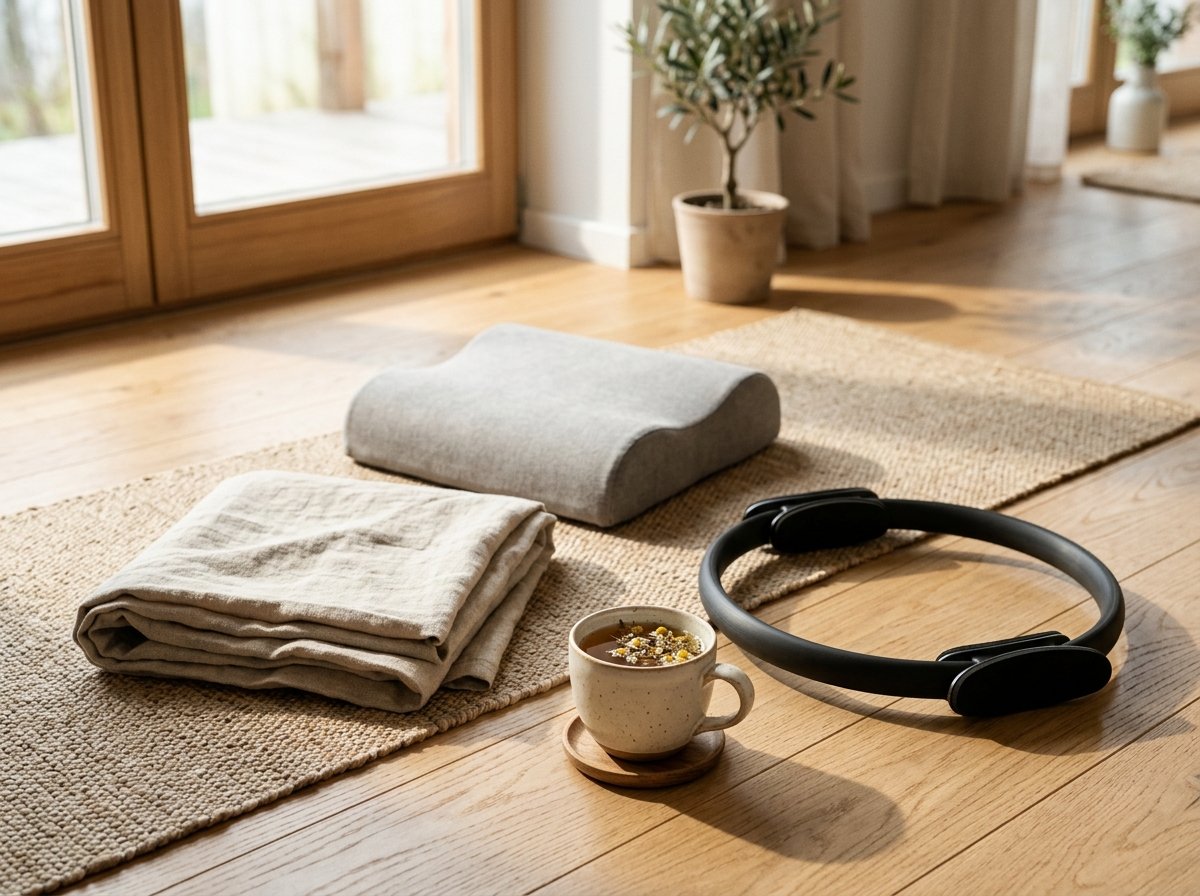
The Neuroscience: Why Pandiculation Outperforms Aggressive Stretching
Traditional passive stretching pulls tight muscle fibers against their resting tension. When pulled abruptly, sensory receptors called muscle spindles trigger the protective myotatic stretch reflex, causing the muscle to involuntarily contract to protect itself from tearing. In contrast, somatic education utilizes pandiculation—a three-step biofeedback process consisting of a gentle voluntary contraction, a slow and conscious eccentric lengthening, and a complete, restful release.
Clinical trials published in the National Library of Medicine (PubMed) demonstrate that pandiculation effectively resets Sensory Motor Amnesia (SMA)—a condition where the brain loses voluntary control over chronically contracted muscles. Research highlighted in Frontiers in Human Neuroscience confirms that mindful, slow-cadence somatic movements stimulate proprioceptive mechanoreceptors and down-regulate sympathetic fight-or-flight tone, allowing the autonomic nervous system to return to a calm parasympathetic baseline.
🌿 The Golden Somatic Principle
Never push into pain or stretch to your maximum end range. Somatic yoga is not about flexibility or burning calories; it is an internal sensory retraining practice. Move at 60% of your maximum effort, breathe smoothly through the nose, and give yourself 3 to 5 seconds of total stillness after each repetition to allow your nervous system to integrate the new baseline.
5 Somatic Micro-Movements to Dissolve Chronic Tension
Perform these 5 mindful micro-movements on a supportive, non-slip surface in a quiet room. Wear loose, comfortable clothing and close your eyes to enhance internal interoceptive focus.
Somatic Arch and Flatten
Lie supine with knees bent and feet flat on the floor hip-width apart. On a slow inhale, gently tilt your pelvis forward, arching your lower back slightly off the mat. On a long, unhurried exhale, smoothly contract the abdominal muscles to flatten your lower back completely into the floor. Pause and fully soften. Repeat 6 to 8 times to reset chronic lumbar spasms.
Somatic Lateral Ribcage Expansion with Fascia Ring
Lie on your right side with knees bent at 90 degrees. Hold our ABS Yoga Circle Fascia Stretching Ring gently between both palms in front of your chest. Inhale and reach your top arm slightly upward, opening the ribcage. Slowly exhale to lower it back down with zero effort. This pandiculates the tight intercostal and quadratus lumborum muscles on the side body.
Gentle Pelvic Clock Exploration
From the supine constructive rest position, visualize a clock face resting under your sacrum (12 o’clock at your navel, 6 o’clock at your tailbone). Slowly glide your pelvis between 12 and 6, then smoothly rotate around the outer clock edge from 3 o’clock to 9 o’clock. This micro-movement re-educates the deep stabilizing rotator muscles of the hips and sacroiliac joint.
Thoracic Wave & Lumbar Unloading
Transition onto your back and position our Multi-Level Lumbar Spine Stretcher beneath your mid-back on its gentlest level. Inhale and let your shoulders drop outward. Exhale and slowly slide your arms a few inches along the floor like snow angels. This unloads the latissimus dorsi and opens tight pectoral fascia without compressive stress.
Suboccipital Somatic Head Rolls
Rest your head comfortably on our Cervical Spine Traction Neck Stretcher. Close your eyes and roll your head half an inch to the right on an inhale; slowly return to center on the exhale. Repeat to the left. The gentle gravity contour supports the suboccipital muscles, releasing tech-neck strain and tension headaches.
Clinical Precautions & Holistic Integration
Somatic yoga is exceptionally gentle, making it suitable for all fitness levels and age groups. However, if you are recovering from recent spinal disc surgery, acute vertebral fractures, or severe neurological radiculopathy, consult your medical physician or licensed physical therapist before beginning new movement routines.
To cultivate lasting mind-body harmony, combine your somatic movements with complementary restorative practices: mobilize thoracic extension with our yoga wheel for back pain guide, regulate autonomic heart rate variability using our pranayama for nervous system protocol, and release deep fascial pelvic holding with yin yoga for hip opening. Explore curated ergonomic props in our official wellness storefront.
Frequently Asked Questions
How is somatic yoga different from traditional Hatha or Vinyasa yoga?
Unlike traditional yoga styles that emphasize static posture holding or vigorous cardiovascular flows, somatic yoga focuses entirely on internal sensory awareness (interoception) and slow pandiculation to retrain neuromuscular movement patterns.
How often should I practice somatic yoga for tension release?
Practicing for 10 to 15 minutes once daily—especially in the early morning or before sleep—yields profound cumulative benefits by resetting motor nerve firing patterns and promoting restful restorative sleep.
Can somatic yoga help with chronic lower back stiffness?
Yes. Most chronic lower back stiffness results from the brain keeping spinal erectors and psoas muscles in a state of subconscious chronic contraction. Somatic micro-movements consciously release these holding patterns safely.
By shifting from forced physical effort to conscious somatic awareness, you give your nervous system permission to let go of years of accumulated tension, unlocking effortless postural grace and enduring vitality.
Loved this?
Join Slow Mail — Tuesday journals + Sunday rituals.