
Yin Yoga for Hip Opening: 5 Poses to Release Stored Stress
October 1, 2026 • 5 min read • By Manoj Kumar
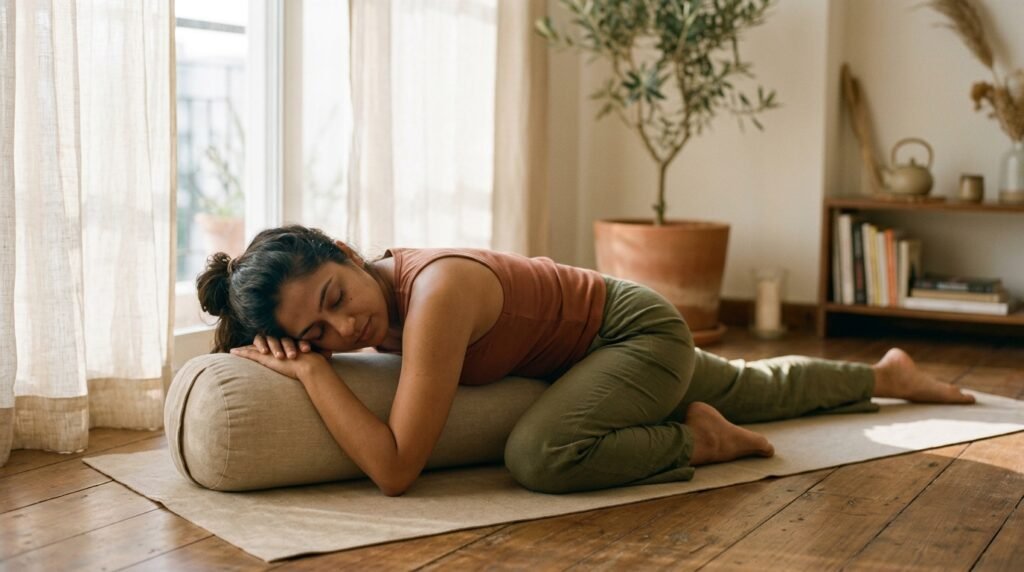
Prolonged sedentary postures, repetitive stress patterns, and suppressed emotional tension frequently manifest as chronic tightness in the pelvic girdle and deep hip rotators. Practicing therapeutic yin yoga for hip opening offers a scientifically validated method to target the dense fascial network, rehydrate the extracellular matrix, and gently release the autonomic holding patterns of the iliopsoas complex. By holding passive postures for three to five minutes without muscular strain, you stimulate deep connective tissue remodeling and cultivate lasting somatic ease.
The Fascial Science: How Yin Yoga for Hip Opening Unlocks Tightness
Unlike dynamic yoga styles that target muscular contraction and cardiovascular endurance, Yin Yoga works specifically on the plastic tissues of the body: deep fascia, ligaments, joint capsules, and tendons. Clinical research published in the National Library of Medicine (PubMed) demonstrates that sustained low-load mechanical tension applied for multiple minutes stimulates fibroblasts to synthesize fresh hyaluronic acid, hydrating collagen fibers and reversing age-related fascial densification.
When practicing yin yoga for hip opening, the primary target is the iliopsoas muscle—the primary fight-or-flight muscle connected directly to the sympathetic nervous system. Chronic emotional stress locks the psoas in a shortened, guarded state, altering pelvic tilt and restricting breath capacity. Neuro-somatic studies highlighted in Frontiers in Human Neuroscience show that prolonged passive stretching downregulates sympathetic hyperarousal, activating the restorative vagus nerve and releasing somatosensory emotional tension stored in the pelvic floor.
🌿 The 70% Fascial Yield Principle
In Yin Yoga, never push to your maximum physical boundary. Settle into each pose at approximately 60% to 70% of your maximum range of motion. Forcing a stretch engages the protective myotatic stretch reflex, causing muscles to contract. By staying relaxed and supported by props, muscular resistance melts away, allowing gentle mechanical stress to penetrate the deep collagenous fascia.
5 Restorative Yin Poses to Release Deep Hip & Psoas Tension
This 15-to-20 minute routine uses supportive props to facilitate complete muscular surrender. Transition between postures mindfully, allowing 30 seconds of neutral rebound in Savasana between deep holds.
Supported Sleeping Swan (Pigeon Variation)
From all fours, slide your right knee behind your right wrist and extend the left leg straight behind you. Place a cylindrical bolster lengthwise under your chest and rest your torso completely forward. Close your eyes and breathe into the right gluteus medius and piriformis. This pose decompresses the sacroiliac joint and gently elongates deep external hip rotators.
Restorative Dragon Pose (Low Lunge with Blocks)
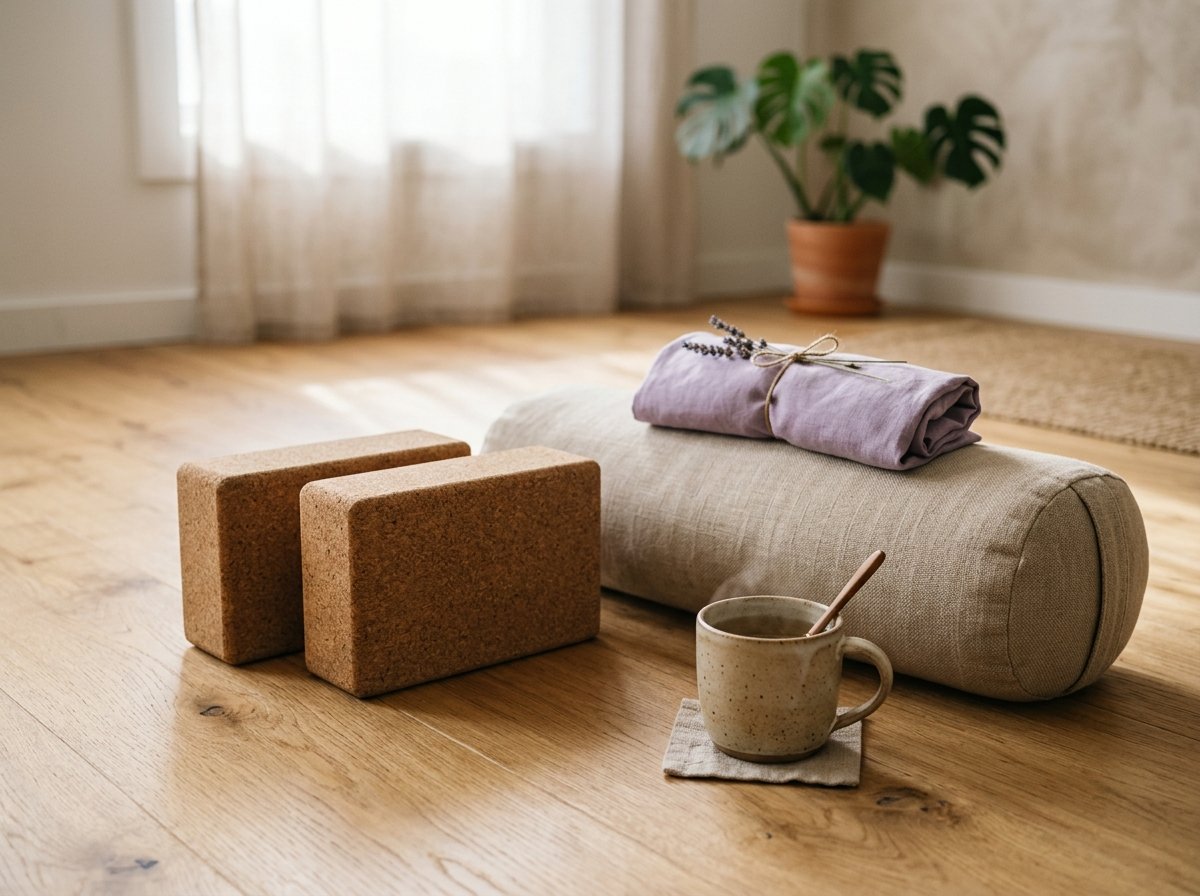
Step your right foot forward between two cork blocks set to medium height. Lower your left knee to a soft folded blanket and allow your hips to sink gently downward and forward. Keep your chest elevated without gripping the thigh muscles. This target hold creates a sustained release along the anterior hip flexors and deep iliopsoas tendon.
Yin Butterfly Pose (Baddha Konasana)
Sit tall with the soles of your feet touching, allowing your feet to slide 12 to 18 inches away from your pelvis to form a diamond shape. Softly round your spine forward, resting your forehead onto a block placed atop your feet. Unlike active forward folds, allow the back to curve naturally to gently stretch the thoracolumbar fascia and inner adductors.
Half Butterfly with Side Body Open (Ardha Baddha Konasana)
Extend your right leg straight out at a 45-degree angle while keeping the left foot tucked toward the groin. Rest your right forearm on a block inside the right leg and gently drape the left arm over your head. This pose releases the quadratus lumborum (QL) and lateral hip crest, relieving chronic lower back compression.
Supported Reclined Goddess Pose (Supta Baddha Konasana)
Lie back onto a bolster angled on a block, bringing the soles of your feet together with blocks supporting both knees. Place one hand over your low belly and one over your heart. Breathe softly for 3 minutes. This passive restorative hold integrates the entire practice and restores parasympathetic vagal safety.
Clinical Precautions & Mindful Daily Habits
Because Yin Yoga stresses the deep joint capsules and ligaments, practitioners must avoid bouncing, forcing, or aggressive pushing. If you experience sharp, burning, or electrical sensations in the knee joints or sacroiliac region, back out of the posture immediately and use higher prop support. Individuals recovering from recent hip arthroscopy, labral tears, or severe sciatica should practice under qualified medical guidance.
To cultivate whole-body vitality and balanced movement, complement your hip-opening sessions with synergistic mindful rituals: enhance lower body recovery with our wall yoga for lymphatic drainage sequence, support visceral motility with our yoga for gut health guide, and ground your autonomic nervous system using resonant pranayama breathwork. Discover organic bolsters, meditation zafus, and high-density cork blocks in our curated wellness storefront.
Frequently Asked Questions
Why do deep hip opening poses trigger strong emotional releases?
The iliopsoas and pelvic floor muscles are neurologically linked to the brain’s survival alarm system. Releasing long-held muscular contraction in the hips safely downregulates stored sympathetic fight-or-flight energy, often bringing a profound sense of relief.
How often should I practice yin yoga for hip opening?
Practicing two to three times weekly provides optimal fascial hydration and remodeling without overstressing connective ligaments.
Should I warm up before doing yin yoga for hips?
No intensive warm-up is required. In fact, practicing when muscles are relatively cool allows the mechanical tension to bypass warm, elastic muscle fibers and directly reach the dense collagenous fascia.
By making gentle, sustained hip opening a mindful habit, you release years of stored tension, rehydrate your joints, and establish enduring physical and emotional calm.
Loved this?
Join Slow Mail — Tuesday journals + Sunday rituals.