
Yoga Wheel for Back Pain: 5 Restorative Spine Extensions
October 2, 2026 • 5 min read • By Manoj Kumar
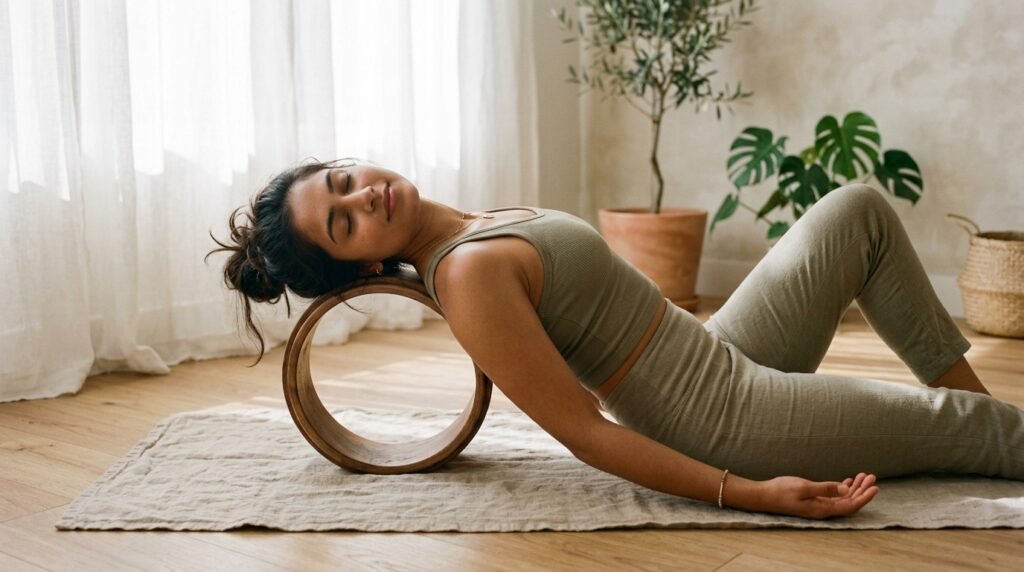
Hours spent hunched over laptops, driving, and looking down at smartphones force the spine into chronic flexion, causing rounded shoulders, tight hip flexors, and persistent lumbar stiffness. Utilizing an ergonomic yoga wheel for back pain relief offers a clinically proven mechanical method to gently reverse postural kyphosis, decompress overloaded intervertebral discs, and stretch the tight anterior fascia of the chest. By matching the natural curvature of the human spine, this versatile prop restores pain-free functional mobility in just 10 minutes a day.
The Biomechanics: How a Yoga Wheel for Back Pain Decompresses the Spine
Modern physical therapy and orthopedic biomechanics recognize that spinal discomfort is rarely caused by the lower back in isolation. Instead, prolonged sedentary desk sitting immobilizes the thoracic spine (the rigid mid-back ribcage area), forcing the flexible lumbar vertebrae and cervical neck to overcompensate under strain. Clinical trials published in the National Library of Medicine (PubMed) demonstrate that targeted passive thoracic extension decreases compressive load on lumbar discs and immediately enhances ribcage respiratory excursion.
When you drape your back over an ergonomic yoga wheel for back pain management, the circular contour provides targeted segmental traction across each individual vertebra. This gentle passive arch opens the pectoral muscles and intercostal fascia, alleviating chronic muscular tension in the latissimus dorsi, rhomboids, and upper trapezius. Studies indexed in Frontiers in Physiology confirm that myofascial rolling over contoured supports stimulates proprioceptive mechanoreceptors, calming guarding spasms in the erector spinae muscles and improving microcirculation along the vertebral column.
🌿 Clinical Spine Support Rule
Always initiate wheel extension at the mid-back (bra-line level) rather than the lower lumbar arch. Keep your knees bent and feet firmly grounded hip-width apart. This stabilizes the pelvis and ensures the extension mobilizes the stiff thoracic cage where postural restriction originates.
5 Restorative Extensions to Relieve Back & Neck Tension
Perform this 10-to-15 minute daily restorative routine on a non-slip yoga mat. Breathe deeply and slowly through the nose, allowing the spine to mold naturally around the wheel without straining or holding breath tension.
Passive Thoracic Heart Opener
Sit on the floor with our Solid Wood Stretching Yoga Wheel positioned vertically behind your shoulder blades. Gently lean backward, resting your thoracic spine onto the wheel and letting your head relax onto the top curve. Open arms wide in a T-shape. This effortlessly stretches tight pectorals, releases chest constriction, and decompresses rounded shoulders.
Segmental Rolling Spinal Massage
From the heart opener, press into your feet and elevate your hips 2 to 3 inches off the ground. Slowly push through your heels to glide the wheel from your mid-back up toward the base of the neck and back down. This applies gentle rhythmic acupressure along the spinal erector muscles, releasing deep myofascial trigger points and promoting blood flow.
Elevated Wheel Child’s Pose (Balasana)
Kneel with knees wide and big toes touching. Place both palms on top of the wheel in front of you. Exhale and roll the wheel forward, dropping your chest toward the floor and lengthening your armpits. Elevating the hands decompresses the latissimus dorsi, shoulders, and lower lumbar fascia simultaneously while calming the nervous system.
Supported Wheel Bridge (Setu Bandhasana)
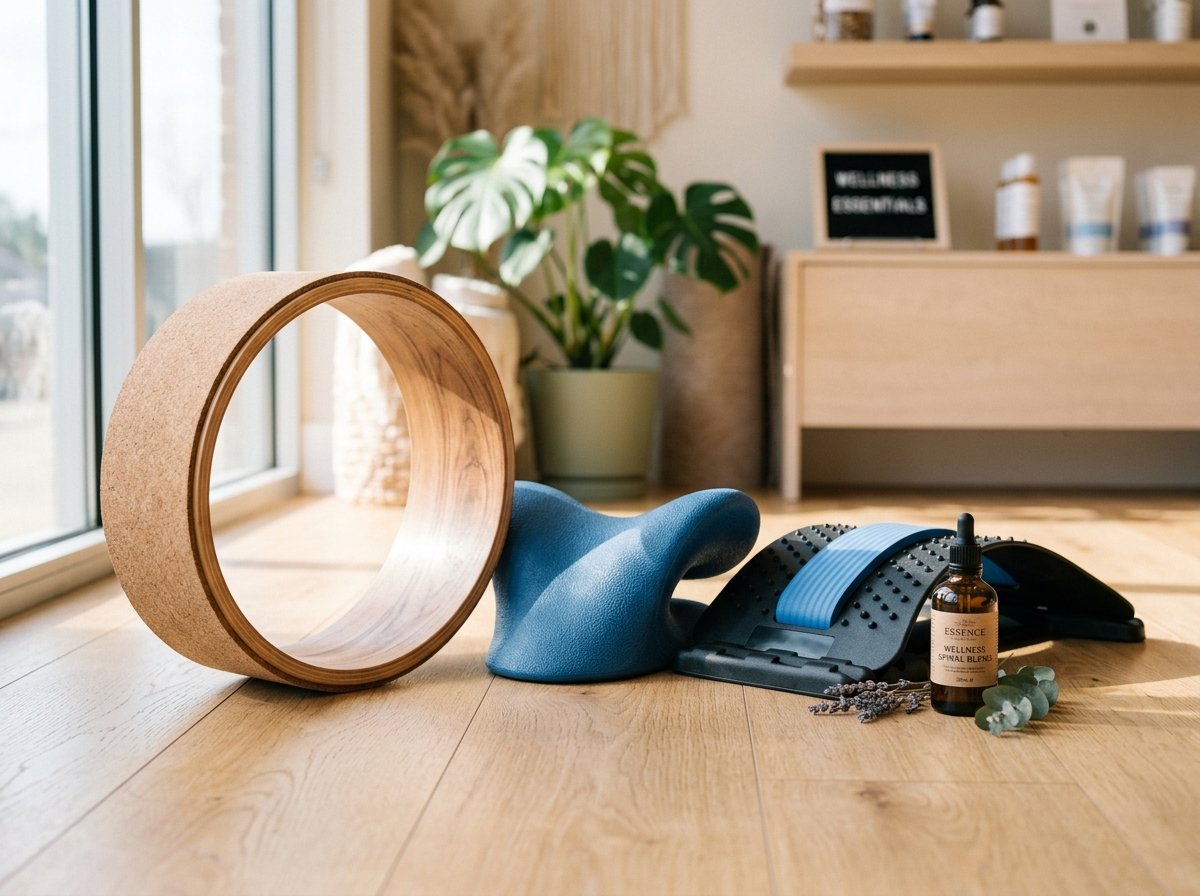
Lie supine with knees bent and slide the wheel under your sacrum for elevated support, or alternate with our Multi-Level Lumbar Spinal Stretcher. Extend your legs straight out to release the hip flexors. This creates passive traction through the lumbosacral junction, unloads the lumbar discs, and elongates tight psoas fibers.
Cervical Traction & Neck Reset
Complete your session by resting your head onto our Cervical Spine Traction Neck Stretcher for 2 minutes. The gravity-assisted curve cradles the suboccipital muscles, gently stretching the cervical lordosis, reversing forward head posture, and eliminating desk-induced neck tension.
Clinical Precautions & Mindful Daily Habits
While spinal extension is highly restorative, move at your own pace and honor your body’s boundaries. Never force your neck or lower back into extreme ranges of motion. If you have acute spinal disc herniation, severe osteoporosis, spondylolisthesis, vertebral instability, or are recovering from recent back surgery, consult your physical therapist or medical physician before using rigid spinal wheels or back stretchers.
To establish lasting postural freedom, integrate your wheel routines with complementary mindful rituals: release deep pelvic tightness with our yin yoga for hip opening sequence, reduce lower limb fluid pooling using wall yoga for lymphatic drainage, and support visceral wellness with yoga for gut health. Pair your practice with calming aromatherapy using our Ultrasonic Flame Aroma Diffuser available in our curated wellness storefront.
Frequently Asked Questions
Why choose a solid wood yoga wheel over standard plastic foam rollers?
Solid wood yoga wheels provide unyielding structural stability and superior weight distribution (supporting over 500 lbs) without flexing or warping under body weight, ensuring consistent spinal alignment, eco-friendly longevity, and ergonomic comfort.
How often should I use a yoga wheel for back pain?
Using the yoga wheel for 5 to 10 minutes once or twice daily—especially immediately after long work hours—effectively resets postural fatigue, opens breathing capacity, and prevents chronic vertebral stiffness.
Is it normal to hear spinal pops when rolling on the wheel?
Yes. Gentle cavitation (safe gas pressure release in facet joints) is common as vertebrae decompress. However, if you feel any sharp nerve pain, numbness, or pinching, discontinue immediately.
By adding a dedicated yoga wheel session to your daily wellness routine, you decompress hours of desk strain, breathe deeper, and cultivate enduring spinal vitality and postural balance.
Loved this?
Join Slow Mail — Tuesday journals + Sunday rituals.