
Yoga for Beginners at Home: A Simple 15-Minute Morning Guide (No Flexibility Needed)
November 11, 2026 • 5 min read • By Manoj Kumar
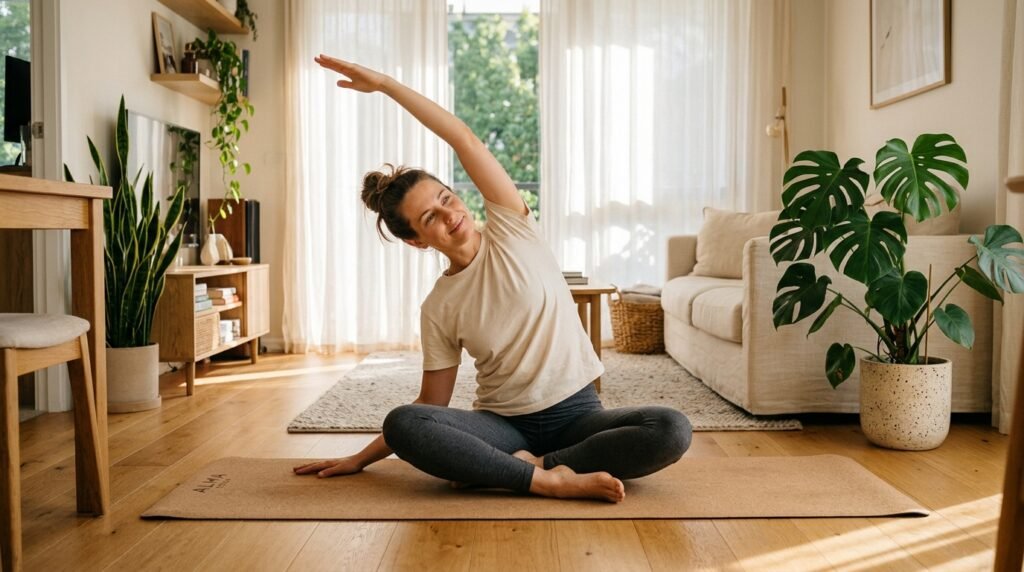
If you have wanted to try yoga for months—but walked away intimidated by complex studio terminology or pretzel-shaped photos online—take a breath. You do not need to touch your toes to start. Yoga for beginners at home is simply about moving gently, breathing smoothly, and relieving everyday stiffness in your own living room at your own pace.
What You Need to Start Today: Just 15 quiet minutes, comfortable stretchy clothes, and a clean floor mat (or soft rug). No prior flexibility, strength, or balance experience is required.
3 Myths Stopping Beginners From Stepping Onto the Mat
- “I’m not flexible enough for yoga.” — Saying you are too stiff for yoga is like saying you are too dirty to take a shower. Tight muscles are the exact reason gentle yoga feels so rewarding.
- “I need expensive studio gear first.” — A basic cushioned mat and a throw pillow or folded towel from your linen closet are plenty to get started. (When you are ready to upgrade, check our beginner yoga mat comparison.)
- “If I don’t sweat hard, it doesn’t count.” — Calming, breath-led movement lowers stiffness and helps clear morning brain fog without wearing out your joints.
Your Complete 15-Minute Beginner Home Yoga Sequence
Follow these 6 approachable poses in order. Move slowly, never force a stretch past mild comfort, and breathe steadily through your nose.
Pose 1: Easy Seated Side Stretch (Minutes 00–03)
Sit cross-legged on the edge of a folded blanket so your hips rest slightly higher than your knees. Place your right palm flat beside your hip and reach your left arm overhead like a calm arc. Breathe into your left ribcage for 4 slow breaths, then switch sides.
Pose 2: Cat-Cow Back Mobilizer (Minutes 03–05)
Come onto all fours with hands shoulder-width apart. Inhale softly to drop your belly and gently lift your chest forward. Exhale slowly to press the mat away and round your spine upward. Repeat for 8 smooth rounds to wake up your lower and upper back.
Pose 3: Resting Child’s Pose / Balasana (Minutes 05–08)
Bring your big toes together, widen your knees comfortably toward the mat edges, and sink your hips backward toward your heels. Stretch your arms forward and rest your forehead softly on the mat (or on a pillow). Stay for 6–8 slow belly breaths whenever you want a breather.
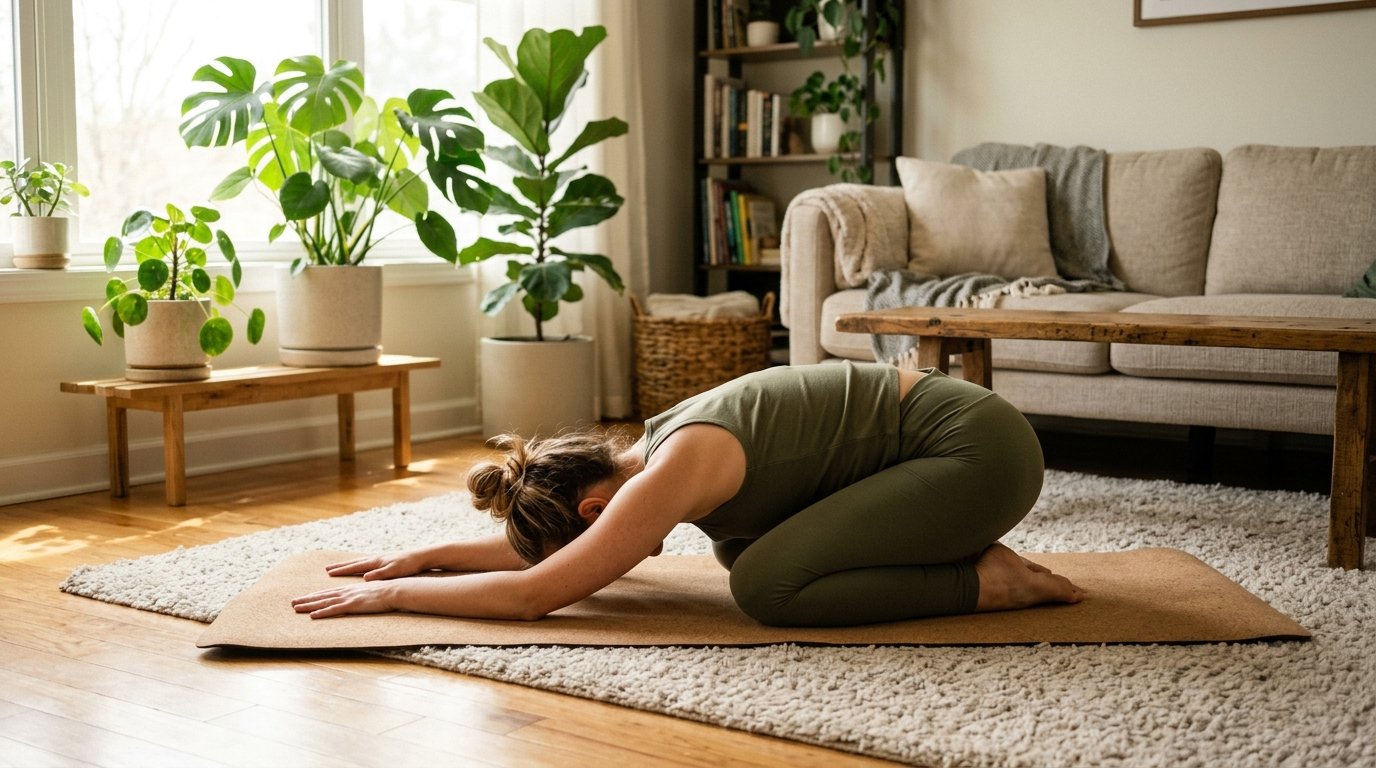
Child’s Pose gently stretches tight hips, shoulders, and lower back muscles with zero joint strain.
Pose 4: Gentle Baby Cobra (Minutes 08–10)
Lie flat on your belly with palms resting lightly beside your ribs and elbows tucked near your sides. Press the tops of your feet gently into the floor and lift your chest just a few inches off the mat using upper-back strength rather than pushing hard with your hands. Lower softly on an exhale and repeat 3 times to counter desk slouching.
Pose 5: Bent-Knee Downward Dog (Minutes 10–12)
Lift your hips upward into an upside-down “V” shape while keeping both knees generously bent. Spread your fingers wide, relax your neck completely, and gently pedal one heel down at a time to loosen stiff hamstrings.
Pose 6: Seated Gentle Twist & Calm Finish (Minutes 12–15)
Return to a cross-legged seat. Sit tall on your inhale, place your right hand lightly behind your hip, and turn your chest gently right for 4 slow breaths; repeat to the left. Finish by sitting quietly for 60 seconds with calm morning breathing.
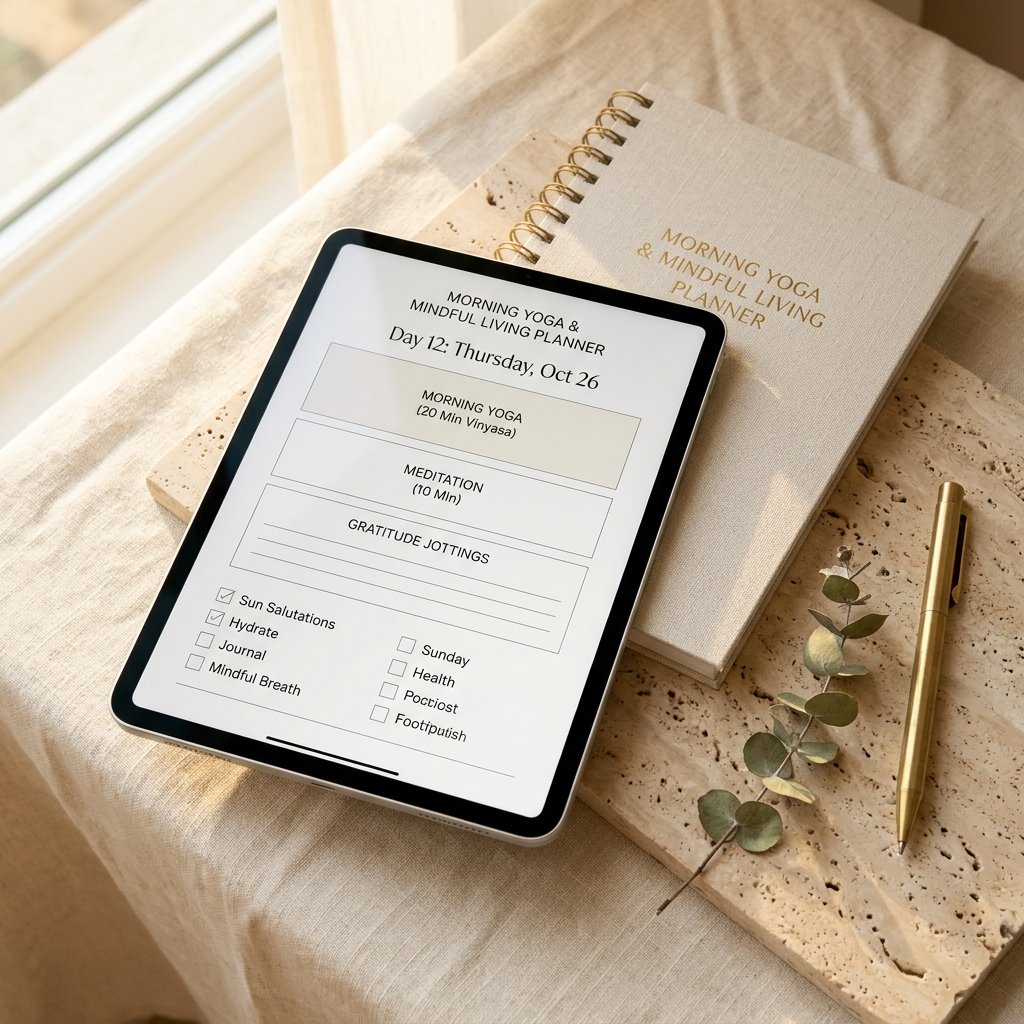
Stay Consistent With the 30-Day Morning Yoga & Mindful Living Planner
Includes a 30-day consistency tracker, printable beginner pose reference cards, morning breathing logs, and a 5-minute desk-stretch checklist.
Weekly Beginner Plan: How Often Should You Practice?
| Week | Recommended Schedule | Goal |
|---|---|---|
| Week 1 | 3 days × 10–15 minutes | Learn basic pose comfort & calm nasal breathing |
| Week 2 | 4–5 days × 10-minute morning flow | Build an effortless habit right beside your bed |
| Week 3–4 | 5–6 days + 1 longer restorative session | Noticeably looser hips, softer shoulders & calmer mornings |
Frequently Asked Questions About Starting Yoga at Home
How long does it take for beginners to feel more flexible?
Most beginners notice reduced morning back stiffness within the first 7 to 10 days, with visible hamstring and hip flexibility improvements around Week 3 or Week 4 of steady 10-minute sessions.
What is the best time of day to practice beginner yoga at home?
Morning works best for consistency because unexpected errands rarely hijack your schedule before 8:00 AM. However, any quiet 15-minute window that fits your routine works wonderfully.
What should I buy first if I want a simple home yoga corner?
Start with a supportive, non-slip mat from our Morning Vibes 9 Yoga Store, plus a firm cushion or pair of cork blocks to bring the floor comfortably within reach.
🧘 Helpful Starter Gear (Amazon.in)
If you practice on hard marble or wooden floors, a supportive 6mm mat and basic blocks keep knees comfortable from day one. (Affiliate links support our free guides.)
Compare 6mm Beginner Mats • See Starter Yoga Blocks & Straps
Wellness Note: This beginner routine is designed for general wellness and education. Always listen to your body, avoid sharp joint pain, and consult a healthcare professional if you have pre-existing spinal or knee conditions.
Loved this?
Join Slow Mail — Tuesday journals + Sunday rituals.