
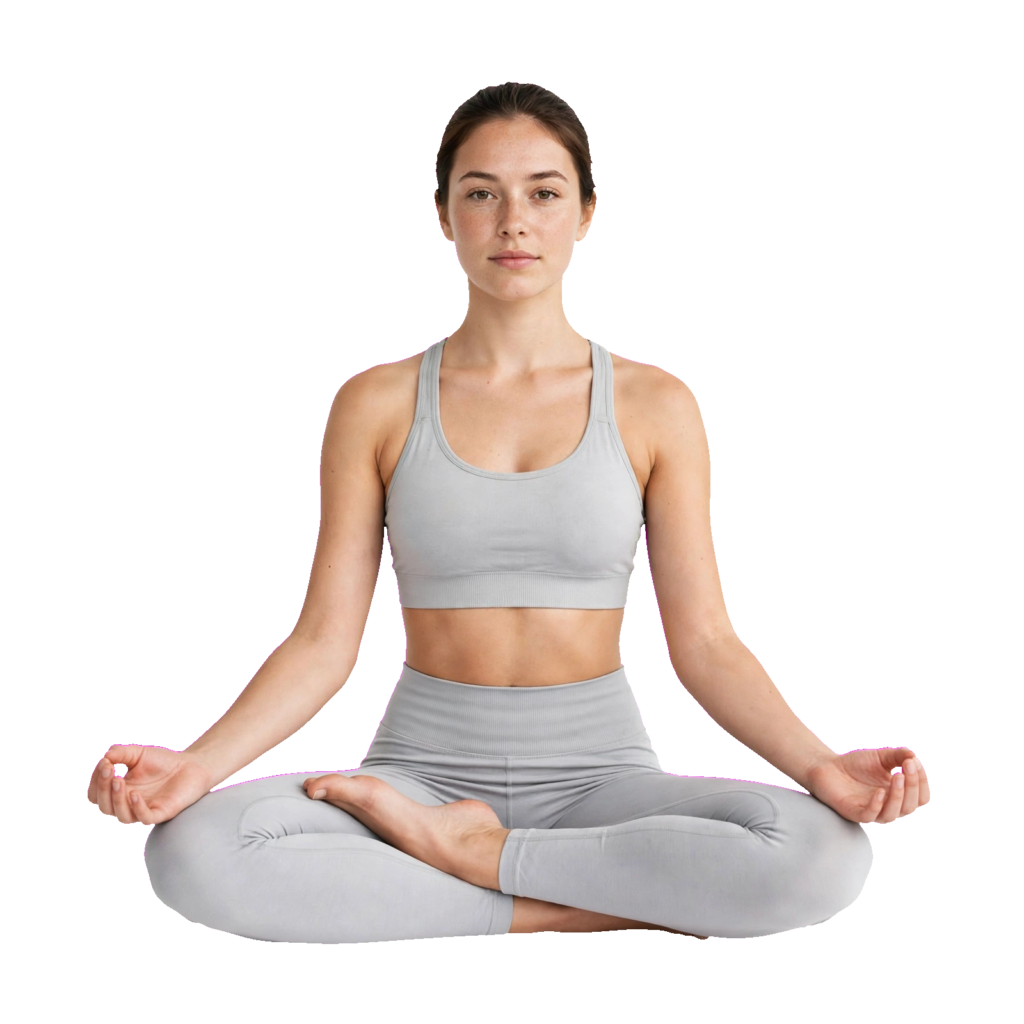
The alarm sounds at dawn, and before your feet touch the floor, your mind is already sprinting through obligations. In our culture of relentless acceleration, the body involuntarily braces, locking the diaphragm and trapping breath in shallow chest patterns. Unrolling your mat for a grounding slow flow yoga sequence offers an immediate physiological antidote. Instead of rushing through rapid vinyasas, slow flow invites your somatic awareness downward into the earth, signaling to your nervous system that you are profoundly safe.
Inspired by community mindful movement classes—such as the University of Maryland, Baltimore’s “Launch Your Life” mat yoga series—slowing your physical practice is not a regression in discipline. It is a masterclass in autonomic nervous system regulation. When you synchronize prolonged breath cycles with deliberate, weight-bearing postures, you systematically discharge fight-or-flight energy, preparing you to meet the day with grounded clarity.
 Empowering mindful movement, breathwork, and conscious alignment.
The Neuro-Somatic Mechanics of Slow Flow Yoga
Why does decelerating movement produce such profound mental calm? Fast workouts often sustain sympathetic arousal, keeping cortisol circulating. In contrast, an intentional slow flow yoga sequence activates the ventral vagal complex of the vagus nerve—the neural pathway responsible for emotional equilibrium, rest, and physiological repair.
As you transition mindfully between postures, slow joint articulation stimulates mechanoreceptors embedded deep within your myofascial webbing. Ruffini endings and Pacinian corpuscles respond to slow, sustained shearing forces by sending inhibitory feedback to the central nervous system. This somatic loop lowers blood pressure, softens chronic muscle bracing, and calms amygdala hyperactivity.
“True somatic strength is not measured by how quickly you change shapes, but by how much conscious presence you inhabit within the space between movements.”
By moving with measured cadence, you cultivate interoception—the nervous system’s capacity to perceive internal signals like heart rate, muscle tension, and breath volume. Practicing this slow flow yoga sequence trains you to detect early stress cues, preventing burnout before it takes hold.
Step-by-Step Slow Flow Yoga Sequence to Launch Your Day
This 20-minute practice requires only your mat and an open mind. Approach each posture with curiosity, letting breath guide every transition.
Phase 1: Primal Grounding & Diaphragmatic Awakening
Begin lying supine in Constructive Rest Pose, knees bent, feet flat on the mat hip-width apart, and hands resting gently over your lower abdomen.
- Centering Breath: Inhale through your nose for 4 counts, expanding the lower ribs laterally. Exhale smoothly for 6 counts, releasing spinal tension. Complete 6 full cycles.
- Pelvic Rocking: On your inhale, tilt the pelvis forward, arching the lower spine. On your exhale, imprint the lumbar spine into the mat, drawing the navel inward. Repeat for 8 fluid cycles.
- Reclined Butterfly (Supta Baddha Konasana): Bring soles together, opening knees wide onto blocks. Rest arms in a cactus shape, opening chest fascia for 5 steady breaths.
Phase 2: Fluid Spinal Mobilization & Low Lunges
Roll to your side and press up into tabletop on all fours, spreading fingers wide to distribute wrist pressure.
- Spinal Waves (Cat-Cow): Inhale to draw the chest forward as the tailbone tilts upward. Exhale to ripple through each vertebra, rounding into the upper back. Layer in circular rib barrels for 6 fluid rounds.
- Low Lunge Wave (Anjaneyasana): Step your right foot forward between your palms. Inhale to lift your torso, sweeping arms high. Exhale to glide hips back into a half split, lengthening hamstrings. Flow gently 4 times per side.
Phase 3: Steady Standing Strength & Balance
From downward dog, step forward into a soft fold, then uncoil vertebra by vertebra into Mountain Pose (Tadasana).
- Warrior II (Virabhadrasana II): Step your left foot back four feet, opening hips and arms wide. Root through the back foot’s outer edge. In this slow flow yoga sequence, hold for 5 breaths, feeling the ground support you.
- Dancing Warrior Wave: Inhale to sweep the front arm up into Reverse Warrior; exhale into Extended Side Angle. Flow between shapes 3 times before repeating on the opposite side.
- Tree Pose (Vrksasana): Root into your right foot, placing the left sole against your calf or inner thigh. Bring palms to heart center, holding for 5 quiet breaths to stabilize balance.
Phase 4: Parasympathetic Integration & Rest
Lower down to your mat to conclude movement and initiate parasympathetic recovery.
- Supported Bridge Pose: Rest your sacrum on a foam block at low height. Open your arms wide and let gravity lengthen the psoas for 2 minutes.
- Supported Inversion: Extend legs toward the ceiling, resting your pelvis on the block. This inverted angle stimulates baroreceptors, steadily lowering heart rate. Hold for 3 minutes.
- Savasana: Lower your legs flat, close your eyes, and surrender muscular effort for 5 minutes of stillness.
01
Ground
Diaphragm &
Pelvic Base
02
Mobilize
Spinal Waves &
Hip Freedom
03
Stabilize
Steady Warrior &
Equilibrium
04
Integrate
Vagal Tone &
Deep Stillness
Cellular and Cognitive Benefits of Daily Slow Flow
Practicing this slow flow yoga sequence delivers measurable biological payoffs that extend beyond flexibility. At the cellular level, long isometric holds and gradual transitions stimulate the hydration of the extracellular matrix. Fascial tissue functions like a sponge; gentle tension expels metabolic waste and draws fresh interstitial fluid into connective layers.
Moreover, committing to a consistent slow flow yoga sequence recalibrates your endocrine profile. Clinical investigations reveal that prolonged exhalations combined with gentle posture holds trigger a rapid reduction in salivary cortisol while boosting Brain-Derived Neurotrophic Factor (BDNF). This neurochemical balance sharpens concentration and fortifies emotional resilience.
Mentally, an intentional slow flow yoga sequence dismantles the false perception of urgency. When you slow your motor output on the mat, your prefrontal cortex shifts out of reactive problem-solving and into expansive strategic thinking, allowing you to launch your tasks with composure.
🌿 Morning Vibes Mind-Body Protocol
Commit to unrolling your mat for this slow flow practice at least three mornings per week. Do not rush the transitional breaths between shapes; the neuro-somatic magic lives in the quiet space between movements.
Frequently Asked Questions
How does a slow flow yoga sequence differ from a traditional Vinyasa class?
While both styles synchronize breath with postures, traditional Vinyasa moves at a rapid one-breath-per-movement pace. A slow flow yoga sequence lingers for 3 to 5 deep breaths per posture, prioritizing joint stability, fascial hydration, and parasympathetic recovery.
Can beginners safely practice this slow flow yoga sequence at home?
Yes. The deliberate pacing of a slow flow yoga sequence is exceptionally well-suited for beginners. Moving without rush provides ample time to align joints safely, listen to internal somatic feedback, and adjust postures using yoga blocks.
What is the ideal time of day to perform this slow flow yoga sequence?
While this slow flow yoga sequence is crafted as a morning ritual to ground anxious energy and launch your daily focus, its calming nature also makes it an effective afternoon reset to shed workplace fatigue.
Launch Your Day from Inner Stillness
When you complete this slow flow yoga sequence and step off the mat, notice the subtle shifts in your physical state. Your jaw is soft, your shoulders rest naturally away from your ears, and your breath moves deeply into your abdomen. You have recalibrated your autonomic nervous system.
In a world that demands rapid reaction and non-stop output, moving slowly is a profound act of self-preservation. Step forward into your day not from anxiety, but from the enduring stability of your own centered awareness.
