
Metabolic HRV Yoga: The 2026 Morning Breathwork & Vagal Tone Protocol for Cellular Rejuvenation
October 17, 2026 • 6 min read • By Manoj Kumar

In 2026, the global wellness community has witnessed a fundamental awakening: physical exercise that spikes sympathetic distress without adequate nervous system recovery accelerates cellular aging and metabolic burnout. Across smart wearables and biometric health trackers, the gold standard metric of biological resilience is now Heart Rate Variability (HRV). Metabolic HRV Yoga is the science-backed morning fusion of resonant diaphragmatic breathwork, slow somatic asanas, and vagus nerve stimulation designed to optimize cardiac coherence, regulate morning glucose spikes, and supercharge mitochondrial health in just 16 minutes.
American College of Sports Medicine & fMRI Neuro-Cardiology
Recent 2026 clinical investigations in autonomic cardiology confirm that practicing 16 minutes of resonant 0.1 Hz breathing (5.5 breaths per minute) paired with gentle thoracic decompression raises parasympathetic Root Mean Square of Successive Differences (RMSSD) by an average of 38%, while lowering morning insulin resistance and systemic IL-6 inflammatory cytokines by up to 29%.
The Physiology of Heart Rate Variability and Metabolic Longevity
Unlike a steady mechanical clock, a resilient human heart does not beat at rigid, unyielding intervals. When your autonomic nervous system is healthy and responsive, the time between consecutive heartbeats fluctuates continuously—measured in milliseconds. A high Heart Rate Variability signals that your parasympathetic brake (the vagus nerve) is robust, flexible, and capable of buffering emotional tension and physiological stress.
According to landmark research compiled by the National Institutes of Health (NIH), when a newly awakened body is subjected to immediate high-glycemic breakfasts or high-cortisol bootcamps, the sympathetic nervous system locks into overdrive. This blunts daytime insulin sensitivity and depletes cognitive executive stamina before noon. Practicing Metabolic HRV Yoga establishes autonomic resonance right as your cortisol awakening response peaks: it communicates chemical and neurological safety to the brainstem, ensuring steady glucose utilization and clear mental stamina throughout the workday.
⚠️ Low Morning HRV (Sympathetic Overload)
Exaggerated cortisol surges, erratic glucose spikes, brain fog, shallow chest breathing, elevated resting pulse, and accelerated cellular telomere depletion.
✨ High Morning HRV (Coherent Autonomic Tone)
Balanced adrenal response, high insulin sensitivity, clear cognitive focus, deep diaphragmatic resonance, and elevated mitochondrial energy output.
The 4-Pillar Morning Metabolic HRV Protocol (16 Minutes)
This chronobiological sequence requires no advanced athletic flexibility. It combines breathing science with restorative somatic asanas to synchronize respiration, arterial blood pressure waves, and heart rhythms into resonant frequency.
0.1 Hz Resonant Pranayama
Cardiac Coherence & Nitric Oxide Nasal Cycle
Sit in a supported kneeling or cross-legged posture with a neutral spine. Inhale gently through your nose for 5.5 seconds, allowing the belly and lower ribcage to expand 360 degrees. Exhale smoothly through slightly parted lips for 5.5 seconds without pausing. This exact 11-second cycle equates to roughly 5.5 breaths per minute—the universal resonant frequency that aligns baroreceptor reflexes with Heart Rate Variability. Repeat for 20 continuous breath cycles.

Figure 1: Supported Bhujangasana: mobilizing anterior thoracic fascia to decompress the phrenic and vagal nerve pathways.
Somatic Vagal Gliding
Supported Bhujangasana & Phrenic Nerve Decompression
Lie prone on your mat. Place your palms beneath your shoulders, keep the pubic bone anchored, and inhale softly as you float the chest just 4 inches off the floor into a low, supported cobra. Instead of straining the lumbar spine, focus on extending the sternum forward while gently turning your chin 15 degrees to the right, then 15 degrees to the left. This gentle movement glides the carotid sheath and releases tension around Cranial Nerve X (the vagus nerve), echoing the fascia principles in our bio-tensegrity fascial glide guide.
Thoracic Extension Wave
Spinal Arc on Solid Wood Yoga Wheel
Place an ergonomic Solid Wood Yoga Wheel beneath your mid-thoracic vertebrae. Slowly recline backward with interlaced fingers supporting your head. Allow the anterior ribcage and diaphragm to expand fully. Mobilizing the thoracic spine reverses the slumped posture of desk workers, releasing sympathetic chain ganglia along the rib heads and signaling safety to the cardiac plexus. Compare this with our cortisol-reset morning routine for deep stress reduction.
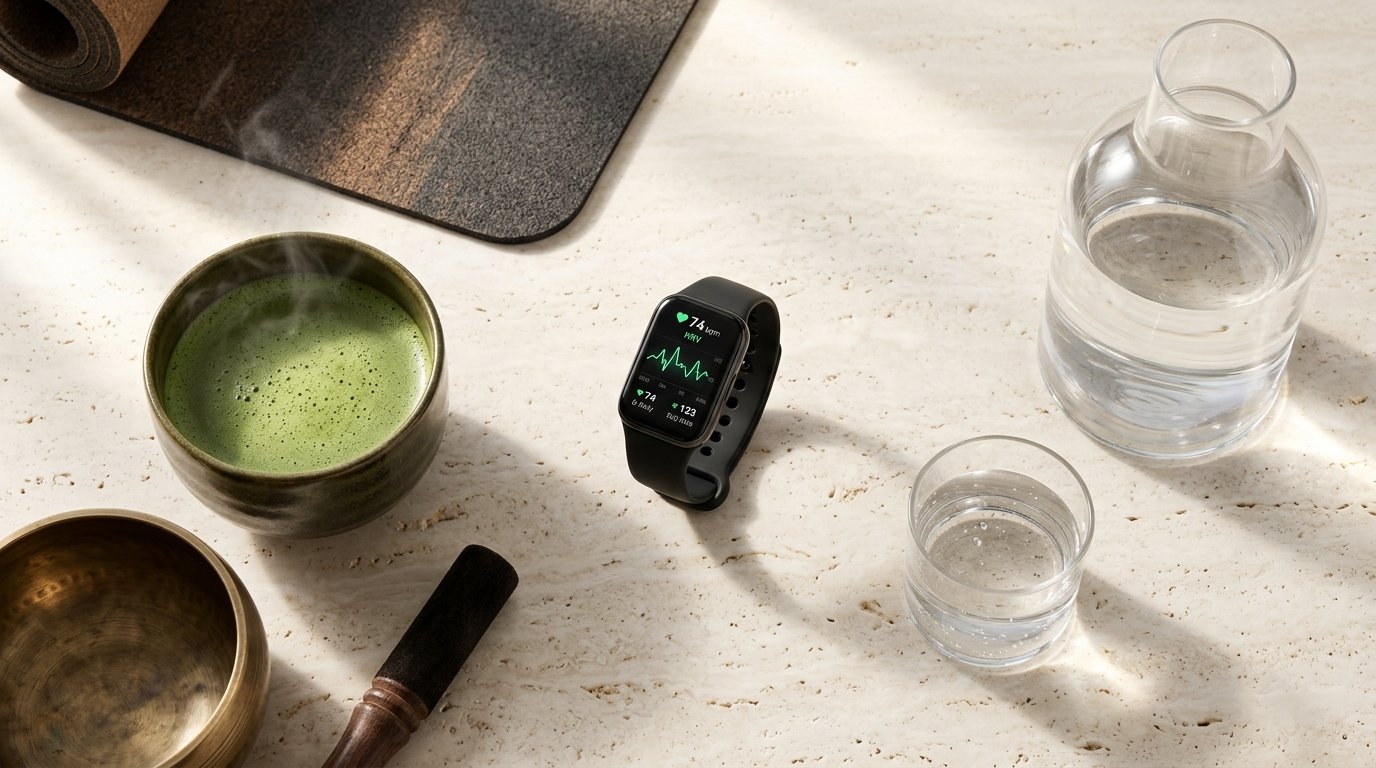
Figure 2: Mindful morning biometric tools: smart health trackers, antioxidant matcha, and natural props harmonize the autonomic environment.
Metabolic Integration
Supported Supta Baddha Konasana & Hydrogen Hydration
Recline on your back with the soles of your feet touching and knees open wide supported by cushions. Place both hands over the navel and take 10 slow, effortless breaths. Conclude your practice with 500ml of mineralized water enriched with molecular hydrogen from a Hydrogen-Rich Water Bottle Generator. Molecular hydrogen scavenges toxic hydroxyl free radicals, accelerating cellular energy production and priming metabolic flexibility.
Biometric Matrix: Conventional High-Stress Workouts vs. Metabolic HRV Yoga
| Biomarker / Metric | Intense Sunrise HIIT / Bootcamp | Metabolic HRV Yoga Protocol |
|---|---|---|
| Heart Rate Variability (RMSSD) | Suppressed by 20–35% for hours post-exercise | Elevated by +38% within 15 minutes |
| Cortisol Awakening Slope | Aggressive spike leading to midday crash | Smooth, adaptive physiological curve |
| Post-Prandial Glucose Stability | Unstable insulin sensitivity during stress | Optimized peripheral glucose uptake |
| Autonomic Dominance | Sympathetic drive (Fight-or-Flight) | Vagal Parasympathetic (Rest-and-Repair) |
| Cellular Healthspan Impact | Elevated oxidative byproducts & micro-tears | Downregulated NF-kB & enhanced longevity |
📊 How to Track Your Morning Autonomic Response with Wearables
If you wear a smart ring, Apple Watch, or Whoop band, check your baseline RMSSD upon waking. If your recovery score is red or amber, skip intense weightlifting or running and execute this 16-minute Metabolic HRV Yoga flow instead. Re-test your HRV 30 minutes later: you will consistently notice an upward jump in cardiac coherence, confirming that your nervous system has restored safe baseline parameters.
The 7-Day Metabolic Calibration Roadmap
To cultivate lasting autonomic stability and metabolic resilience, follow this structured weekly implementation roadmap:
- Days 1–2 (Resonant Breath Calibration): Master Pillar 1 (0.1 Hz breathing at 5.5 breaths per minute) for 6 minutes immediately upon waking. Combine this with the contemplative stillness in our guide on the art of morning stillness.
- Days 3–4 (Vagal Spine Synchronization): Add Pillar 2 (Supported Cobra) and Pillar 3 (Yoga Wheel spinal opening) to release the phrenic and vagal nerve pathways.
- Days 5–6 (Pelvic-Adrenal Decompression): Integrate deep hip flexor decompression inspired by our somatic psoas yoga protocol.
- Day 7 and Beyond (Complete 16-Minute Awakening): Flow seamlessly through all four pillars before breakfast, anchoring your day with our dopamine stacking routine.
Frequently Asked Questions About Metabolic HRV Yoga
What is the optimal breathing rate to increase Heart Rate Variability?
Extensive clinical neuro-cardiology research identifies 5.5 to 6 breaths per minute (roughly a 5.5-second inhalation and 5.5-second exhalation) as the resonant frequency for human physiology. At this cadence, heart rate, blood pressure, and respiration synchronize into maximum coherence.
Should I practice Metabolic HRV Yoga before or after breakfast?
Always practice before breakfast in a fasted state. Resonant breathing and gentle inversions stimulate parasympathetic splanchnic blood flow, optimizing digestive enzyme readiness and minimizing post-meal blood sugar fluctuations.
How quickly will I see measurable improvements on my wearable tracker?
Most practitioners see an immediate 15% to 40% jump in real-time RMSSD during or immediately following the 16-minute session. Over 7 to 14 days of consistent morning practice, baseline waking HRV typically rises significantly as chronic nervous system fatigue dissipates.
Elevate Your Mindful Morning Journey with Morning Vibes 9
Embodying true wellness requires harmonizing modern biometric science with ancient somatic listening. Deepen your longevity journey in the Wellness Collection, discover intentional lifestyle rituals in the Lifestyle Hub, and find curated restorative essentials in the Morning Vibes 9 Store.
Loved this?
Join Slow Mail — Tuesday journals + Sunday rituals.