5-Minute Spine Decompression: The Desk Worker’s Guide to Instant Lower Back & Neck Relief
September 11, 2026 • 16 min read • By Sneha
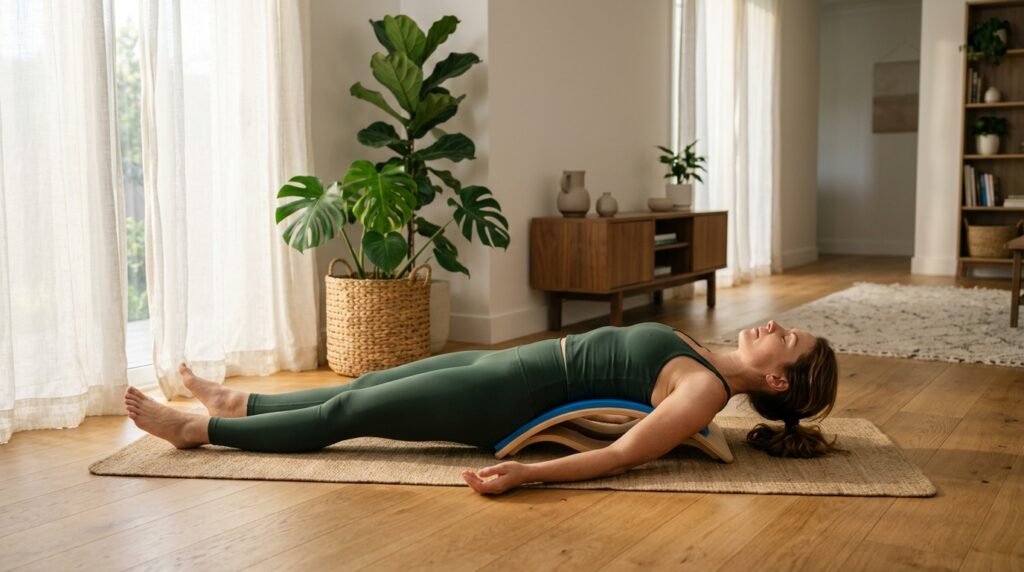
- The Core Problem: Prolonged 8-hour desk sitting increases lumbar disc pressure by 140% to 200% compared to standing posture, leading to chronic lower back pinching and sciatica.
- The 5-Minute Solution: Implementing a daily 5-minute spine decompression ritual gently opens the intervertebral spaces, restores the natural lumbar lordotic curve, and draws nutrient-rich fluid back into compressed spinal discs.
- Target Results: Immediate release of spinal muscular tension, reduced sciatic nerve irritation, and total reset of rounded-shoulder “desk posture”.
If you spend six to eight hours a day sitting at a desk, you are likely familiar with the dull, nagging ache in your lower back by late afternoon. Your shoulders roll forward, your hip flexors tighten, and standing up feels like unfolding stiff origami. This pervasive discomfort is not just general fatigue—it is the direct biomechanical result of constant gravitational load compressing your lumbar vertebrae. Fortunately, practicing a targeted 5-minute spine decompression routine right in your living room or home office can reverse hours of postural stress in mere minutes.
In this comprehensive guide, we examine the clinical science of spinal axial loading, explore why passive lumbar traction is uniquely effective for desk workers, and walk you through a step-by-step daily protocol to decompress your back, reset your neck alignment, and reclaim effortless mobility.
1. The Biomechanics of Desk Slump: Why Sitting Destroys Your Lumbar Curve
To understand why your spine feels so compressed after a workday, we must look at the structural physics of the human spinal column. When standing in neutral alignment, the spine forms a natural S-shaped curve—cervical lordosis in the neck, thoracic kyphosis in the upper back, and lumbar lordosis in the lower spine. This curvature acts like a natural suspension spring, evenly distributing your upper body mass across the vertebrae and shock-absorbing intervertebral discs.
According to landmark orthopedic spinal pressure studies published in the National Institutes of Health (NIH) Spine Research Archives, intra-discal pressure inside the third lumbar disc (L3) varies dramatically based on posture:
When you lean forward toward your keyboard and monitor, the pelvis rotates posteriorly, flattening the lumbar lordosis into an unnatural C-shape. This forces the anterior (front) edges of your vertebrae together, pinching the jelly-like nucleus pulposus backward toward the sensitive spinal nerves. Over weeks and months, this uninterrupted hydraulic squeeze causes disc dehydration, chronic inflammation, and debilitating muscle spasms.
2. How 5 Minutes on a Spine Stretcher Creates Instant Relief
Active exercise and core workouts are essential for long-term health, but when your back is already tight and irritated from hours in an office chair, heavy lifting or aggressive stretching can often aggravate inflamed joints. This is where passive spinal decompression proves revolutionary.
By resting horizontally over an ergonomically contoured back stretcher on a supportive floor mat, your own body weight and gravity combine to generate gentle, axial traction across the lumbar and thoracic vertebrae without any muscular strain. Here is the three-part physiological mechanism that occurs during your five minutes:
1. Imbibition & Disc Rehydration
Spinal discs have no direct blood supply and rely on osmotic fluid transfer (“imbibition”). Decompression creates negative pressure that pulls water, oxygen, and nutrients back into dried-out discs.
2. Natural Lordosis Restoration
The multi-level curved arch gently guides the lumbar spine back into its optimal 35-degree lordotic arch, reversing hours of desk-induced hunched kyphosis.
3. Myofascial Acupressure Release
Precision acupressure nodes apply targeted pressure along the erector spinae and quadratus lumborum muscles, releasing deep trigger points and spasms.
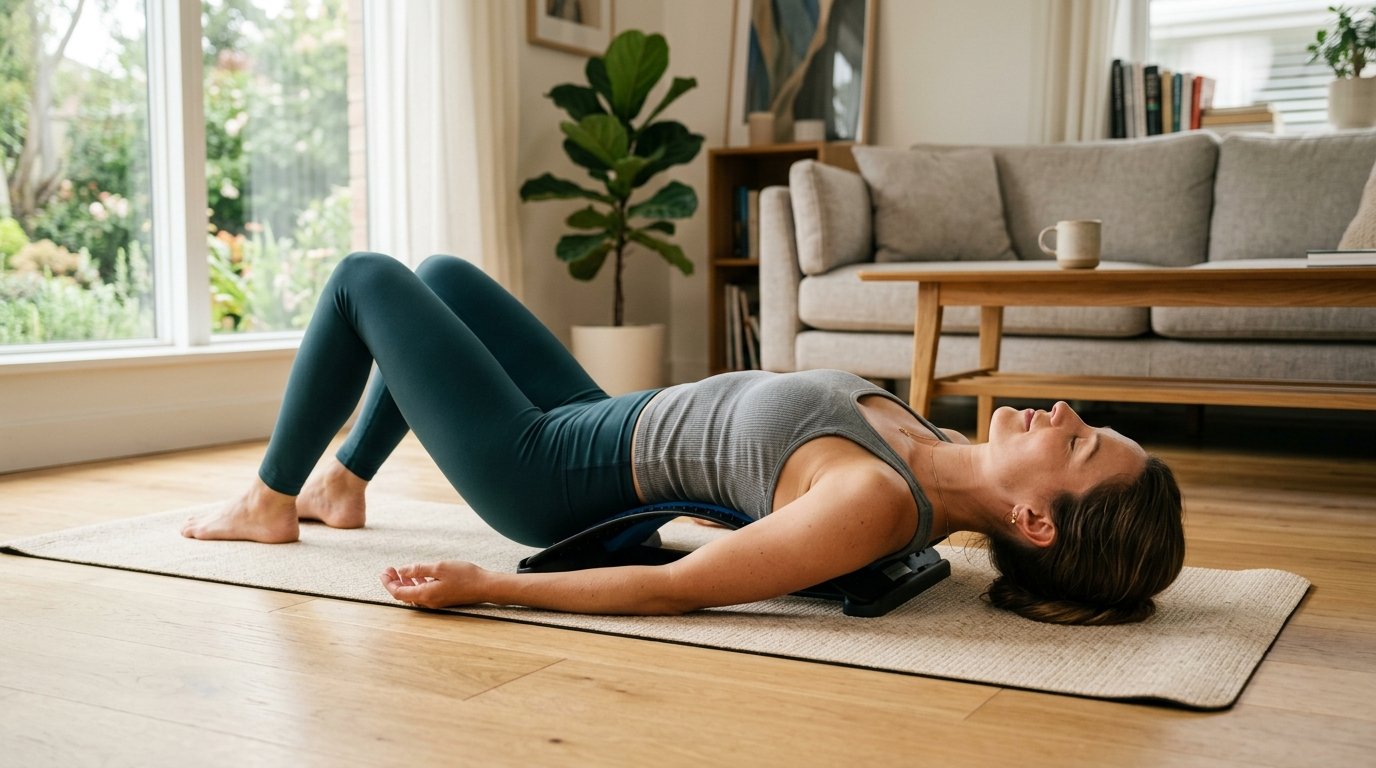
Multi-Level Orthopedic Spine Back Stretcher
Features 88 acupressure nodes, 3 adjustable height arches, and a soft central silicone spine groove for pain-free daily decompression.
3. The Step-by-Step 5-Minute Daily Decompression Routine
Consistency and proper entry/exit mechanics are the secrets to safe spinal traction. Follow this minute-by-minute protocol every afternoon after work or first thing during your morning routine:
Place your spine stretcher on an Eco-Friendly Alignment Yoga Mat on level ground. Set the arch to Level 1 (Beginner: 7cm height). Sit with your tailbone snug against the wide base. Keep your knees bent at 90 degrees with feet flat on the floor, and slowly lower your spine backward onto the arch using your forearms for support.
Rest your arms out to your sides in a “T-position” with palms facing up. Inhale deeply through your nose for a count of 4, feeling your belly and ribcage expand, then exhale slowly through your mouth for 6 counts. With each exhale, allow your body weight to sink heavier into the arch, allowing the lower back muscles to fully release their holding pattern.
If you feel comfortable and pain-free, extend both arms straight overhead along the floor. This activates the latissimus dorsi and pectoralis minor, creating additional longitudinal traction through the thoracic spine and opening the chest and front shoulders.
Never sit straight up from a spine stretcher, as your core muscles will suddenly contract and compress the newly opened spaces. Instead, bend your knees, gently roll onto your right side into the fetal position, and rest on the mat for 30 seconds before pushing yourself up with your hands.
4. Solving the Upper Chain: Fixing “Text Neck” & Rounded Shoulders
The human spine is a continuous kinetic chain. When your lower back slumps, your head automatically juts forward to keep your eyes level with the computer screen. This condition, known clinically as forward head posture or “text neck”, adds massive mechanical leverage to the cervical spine: for every inch your head moves forward, your neck muscles must support an extra 10 to 12 pounds of head weight.
To prevent your upper back and shoulders from immediately collapsing back into poor posture during work hours, pairing your daily 5-minute floor routine with an ergonomic clavicle support brace provides gentle proprioceptive feedback, retraining your rhomboids and trapezius muscles throughout the day.
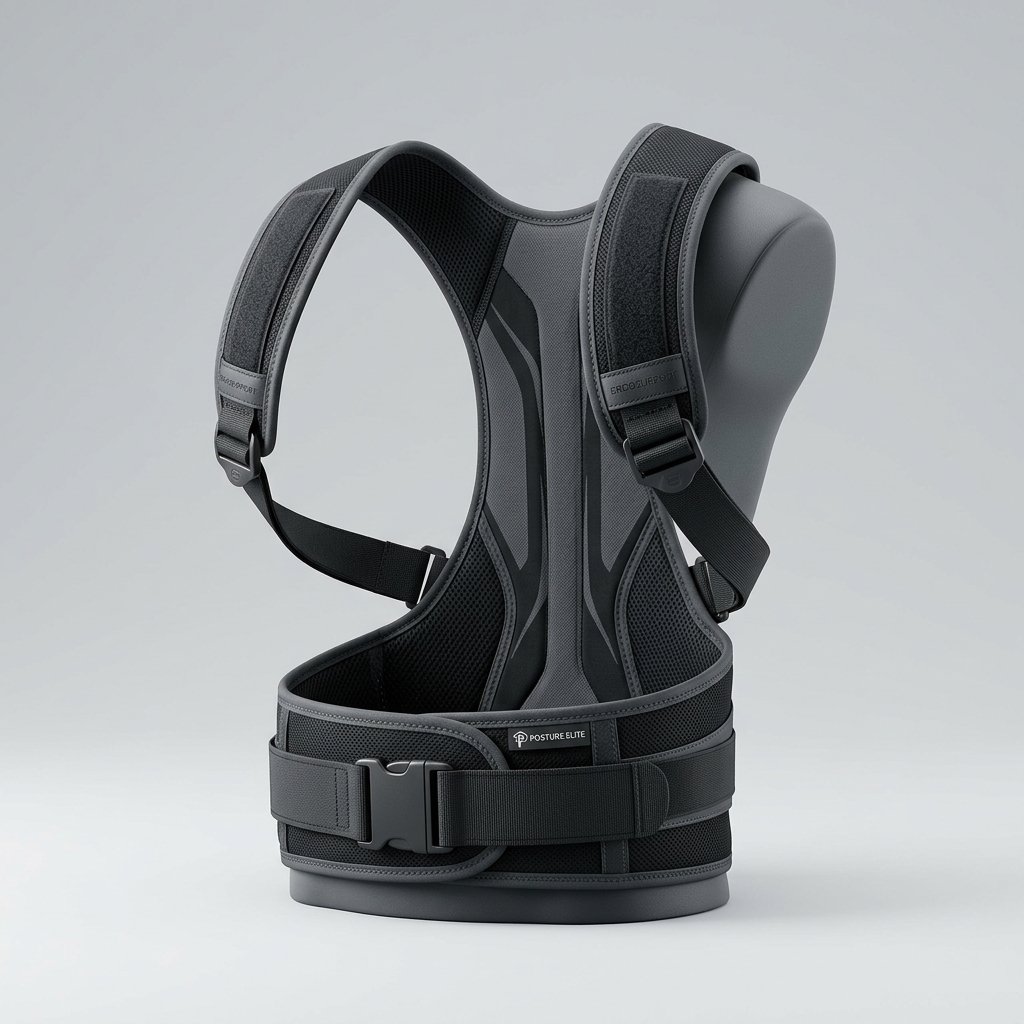
Ergonomic Adjustable Shoulder Posture Corrector Pro
Lightweight, breathable mesh support that gently pulls rounded shoulders back, keeping your cervical spine aligned while working at a computer.
📺 Watch: Posture Corrector Showcase by MorningVibes9
5. Decompression Methods Compared: Stretcher vs Foam Roller vs Inversion Table
Not all back relief tools serve the same purpose. Here is how passive spine stretchers compare against other popular home recovery equipment:
6. Frequently Asked Questions Regarding Spine Decompression
How often should I use a spine stretcher?
For optimal results, use your stretcher 1 to 2 times daily for 5 minutes per session. The best times are immediately after finishing work or before bedtime to decompress your discs before sleep.
Is 5 minutes enough time to relieve lower back pain?
Yes. Studies show that passive spinal traction creates measurable intervertebral space expansion within 3 to 5 minutes of continuous relaxation. Staying on longer than 10–15 minutes at a time is unnecessary and can cause mild muscular soreness.
Can I use a spine stretcher if I have sciatica?
Many people with mild sciatica find significant relief because decompression widens the neural foramina, removing pressure from the pinched sciatic nerve root. However, start at Level 1 (lowest arch), keep knees bent, and consult your medical specialist if you experience acute, sharp shooting pain.
Ready to Reset Your Posture & Eliminate Back Pain?
Explore the official Morning Vibes 9 ergonomics collection. Enjoy 1-click secure checkout, live PayPal buyer protection, and 30-day money-back guarantee with free tracked shipping.
Visit the Official Store →Evidence-Based Medical Citations:
- Nachemson, A. (1981). Disc pressure measurements. Spine Journal / National Institutes of Health (NIH).
- Adams, M. A., & Hutton, W. C. (1985). The effect of posture on the lumbar spine. Journal of Bone & Joint Surgery.
- Callaghan, J. P., & McGill, S. M. (2001). Low back joint loading and flexion during prolonged sitting. Clinical Biomechanics.
Medical Disclaimer: This article is for informational purposes and does not substitute professional medical diagnosis. Consult an orthopedic specialist or physical therapist before starting any new spinal decompression routine.
Loved this?
Join Slow Mail — Tuesday journals + Sunday rituals.