
Somatic Psoas Yoga: The 2026 Morning Flow to Release Stored Stress & Hip Rigidity
October 12, 2026 • 6 min read • By Manoj Kumar
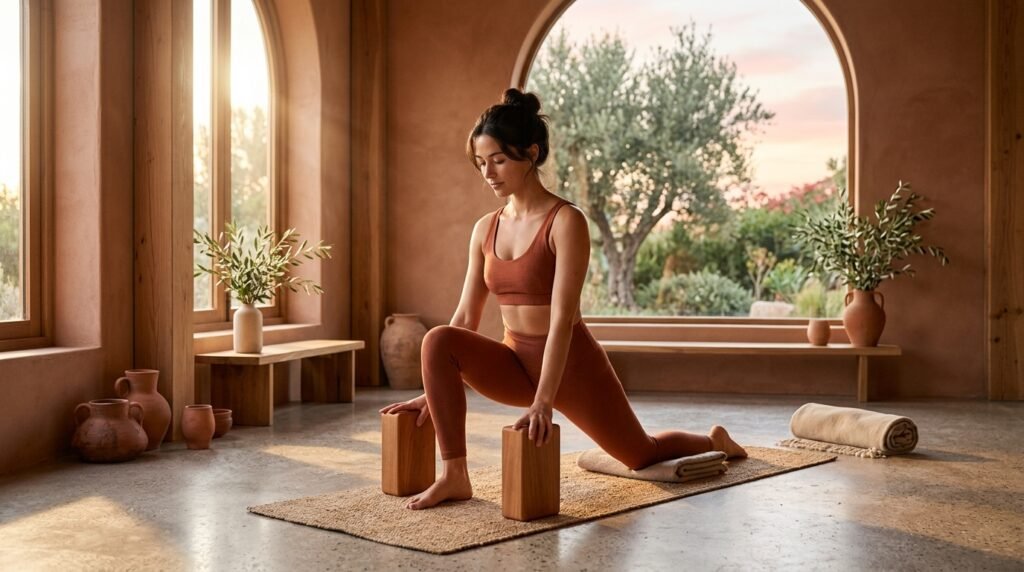
If you sit at a desk for six or more hours a day, chances are your lower back aches, your hips feel cemented, and your nervous system stays in a perpetual state of subtle hyper-vigilance. In 2026, the global wellness movement has uncovered the root physiological link: the deep iliopsoas muscle complex. Somatic Psoas Yoga is the clinical fusion of ancient somatic inquiry and modern biomechanics, specifically crafted to discharge trapped survival reflexes, dissolve chronic hip stiffness, and reset your baseline autonomic state before your workday begins.
🧬 2026 Biomechanical Breakthrough: The “Muscle of the Soul”
Recent 2026 fascial research confirms that the psoas major is the only muscle connecting the lumbar spine directly to the femur, functioning as the primary muscular transducer of the autonomic nervous system. When fight-or-flight triggers contract the psoas involuntarily, conventional aggressive stretching triggers the stretch reflex; gentle somatic pandiculation and micro-movements, however, restore cellular length and lower sympathetic tone by up to 33%.
Why Aggressive Hip Stretches Backfire on a Tight Psoas
Most fitness advice prescribes aggressive lunges or forceful pigeon poses when hips feel tight. However, when the central nervous system perceives chronic threat or mental fatigue, your deep hip flexors contract as an involuntary primitive protective shield. Forcing a contracted psoas into an aggressive end-range stretch creates micro-tears in the tendon and signals danger to the brainstem.
According to clinical studies documented by the National Institutes of Health (NIH), somatic movement operates through pandiculation—a slow, conscious contraction followed by an unhurried, eccentric release. Practicing Somatic Psoas Yoga re-educates the sensory-motor cortex, clears pelvic stagnation, and allows the diaphragm to descend fully during inhalation.
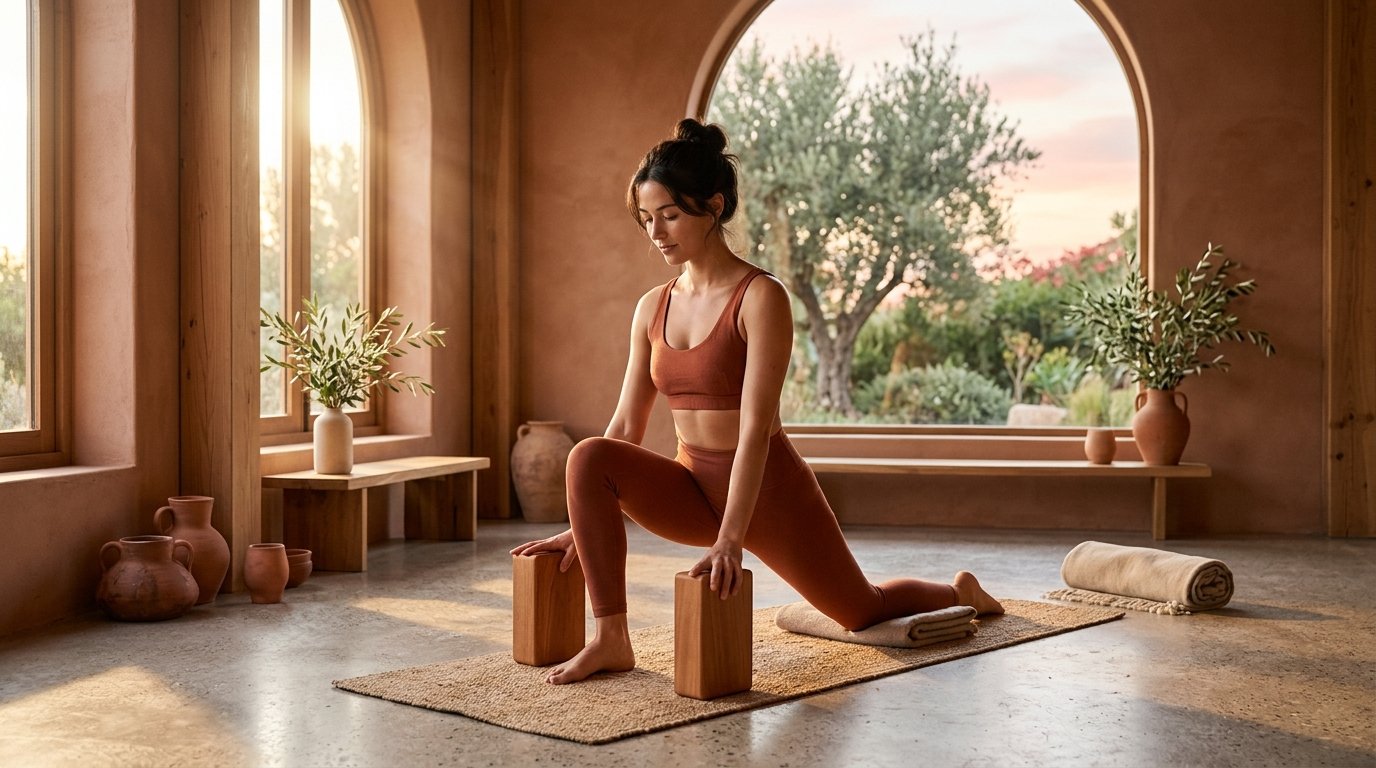
Figure 1: Supported low lunge utilizing wooden blocks to offload lumbar compression during Somatic Psoas Yoga.
The 4-Phase Morning Somatic Psoas Sequence (16 Minutes)
This 16-minute morning flow is sequenced to guide your fascial slings from defensive contraction into buoyant, grounded fluidity.
Constructive Rest & Diaphragmatic Entrainment
Recline on your back with knees bent, feet placed flat on your mat wider than hip-distance apart, allowing your knees to gently rest against each other. Place one hand on your lower belly and one hand over the solar plexus. Inhale deeply into the pelvic bowl for 4 counts; exhale slowly through pursed lips for 6 counts. This completely removes gravitational load from the psoas, signaling immediate visceral safety to the central nervous system.
Pelvic Clocks & Somatic Arch-and-Flatten
From Constructive Rest, imagine a clock face resting beneath your sacrum. On an inhale, gently arch your lower back (tipping your pelvis toward 12 o’clock); on an exhale, slowly draw your naval downward to flatten your lumbar spine against the earth (tipping toward 6 o’clock). Repeat this wave 10 times with minimal muscular effort. This gently flushes nocturnal spinal stiffness and rehydrates the lumbar-fascial junction.
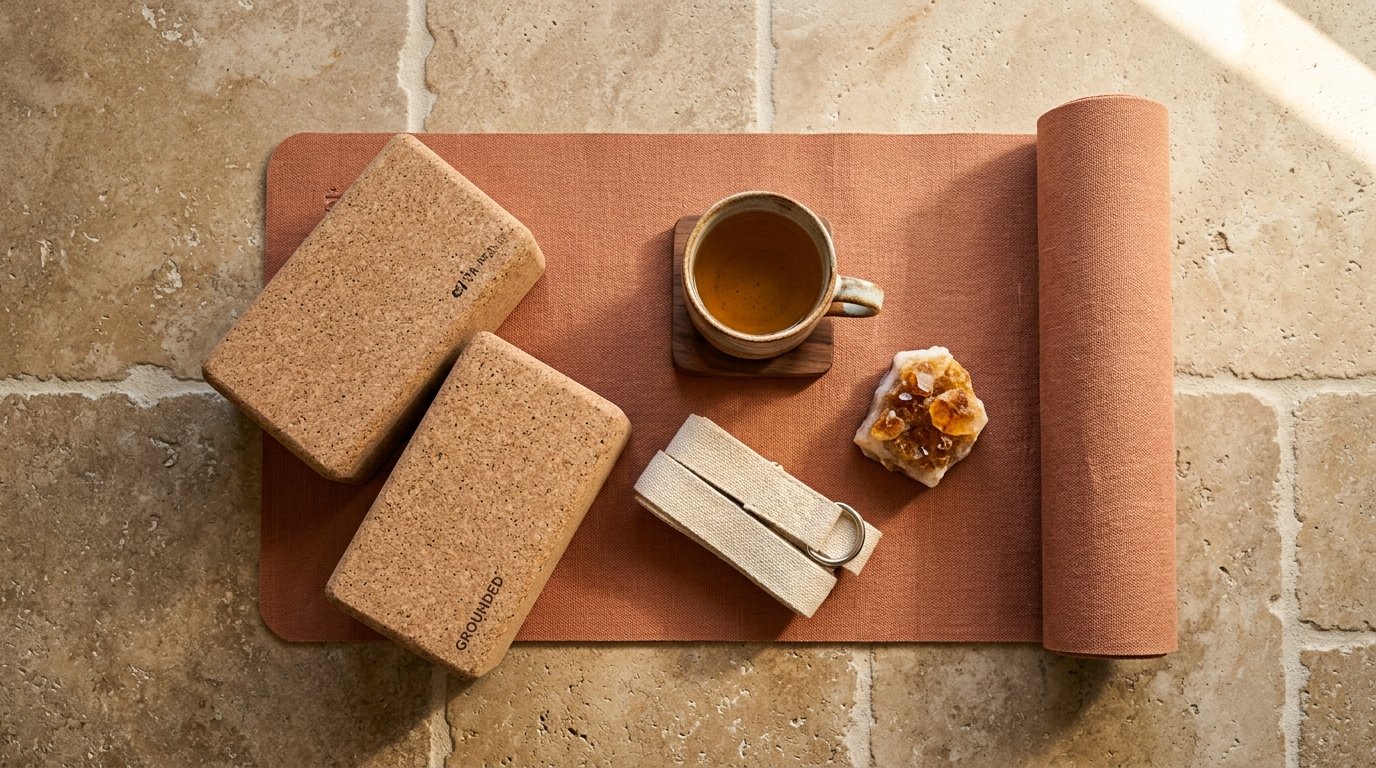
Figure 2: Earth-toned somatic props: cork blocks, organic strap, and herbal tea create a grounding morning sensory anchor.
Block-Supported Anjaneyasana Pandiculation
Transition into a gentle low lunge. Place two supportive cork or wooden blocks beneath your hands to maintain a tall, unloaded thoracic spine. Rather than sinking forward passively, engage your front heel and back knee toward each other isometrically for 3 seconds, then exhale and allow the front of the back hip to soften open. Pair this with thoracic expansion on a Solid Wood Yoga Wheel to release anterior fascial tension. Repeat 5 cycles per side.
Supported Psoas Decompression & Molecular Hydration
Finish your practice in Supported Bridge Pose by sliding a low block or bolster beneath your sacrum. Allow both legs to extend straight along the floor, feeling the profound passive decompression across the front hip creases. Rehydrate the newly expanded extracellular matrix with 500ml of mineralized water from a Hydrogen-Rich Water Bottle Generator to neutralize localized inflammatory oxidants.
Diagnostic Matrix: Chronically Contracted Psoas vs. Somatic Release
| Biomechanical Marker | Hyper-Tonic Psoas (Survival State) | Somatic Psoas Yoga (Restored Safety) |
|---|---|---|
| Pelvic Orientation | Exaggerated anterior pelvic tilt & lumbar shear | Neutral, floating pelvic equilibrium |
| Diaphragmatic Excursion | Restricted, shallow upper chest respiration | Full 360-degree lower ribcage breathing |
| Sympathetic Activation | Continuous low-grade adrenaline & anxiety | Vagal nerve activation and emotional grounding |
| Walking Kinematics | Shuffling stride, locked sacroiliac joints | Effortless leg pendulum & fluid fascial recoil |
✨ Somatic Daily Micro-Practice: The 60-Second Chair Reset
If you spend long hours seated at a desk, stand up every 90 minutes. Place one foot on a sturdy chair, keep your pelvis square, and gently tuck your tailbone while exhaling deeply for 3 cycles. This breaks the sedentary contraction loop and keeps your autonomic nervous system resilient.
The 7-Day Somatic Psoas Calibration Blueprint
Re-educating deep neuromuscular reflexes requires consistency over force. Follow this structured roadmap:
- Days 1–2 (Establishing Neurological Ease): Spend 8 minutes in Constructive Rest (Phase 1) paired with mindful breathing. Read our foundational guide on the art of morning stillness.
- Days 3–4 (Spinal Re-Patterning): Add Pelvic Clocks (Phase 2) to mobilize the lumbosacral junction without joint strain.
- Days 5–6 (Pandicular Lengthening): Introduce Block-Supported Anjaneyasana (Phase 3) and compare with our cortisol-reset morning flow.
- Day 7 and Beyond (The Complete 16-Minute Awakening): Flow seamlessly through all four phases before starting your work routine, integrating our epigenetic longevity habits.
Frequently Asked Questions About Somatic Psoas Yoga
Why is the psoas called the “muscle of the soul”?
In Eastern somatic traditions and somatic psychology, the psoas surrounds the solar plexus and gut-brain nervous centers. Because it contracts during every instinctive startle response, it stores accumulated emotional tension and survival stress when not given the opportunity to unwind.
How is Somatic Psoas Yoga different from traditional hip opener classes?
Traditional yoga often encourages pushing into deep, static stretches which can trigger protective muscle guarding. Somatic Psoas Yoga uses brain-to-muscle sensory re-education (pandiculation) and gentle gravity support to naturally restore length without force.
Can this practice relieve lower back and sciatica discomfort?
Yes. Because the psoas attaches directly to the T12 through L4 lumbar vertebrae, releasing chronic anterior tension takes excessive shear stress off the lower spine and helps balance sacroiliac joint alignment.
Nourish Your Body and Mind with Morning Vibes 9
Sustainable vitality emerges when we stop fighting our bodies and begin honoring their subtle intelligence. Deepen your somatic wellness journey in the Wellness Hub, discover mindful slow routines in the Lifestyle Hub, and find handcrafted props in the Morning Vibes 9 Store.
Loved this?
Join Slow Mail — Tuesday journals + Sunday rituals.