
Neuro-Yoga: The Modern Science of Somatic Flow & Vagal Resilience
September 19, 2026 • 8 min read • By Manoj Kumar
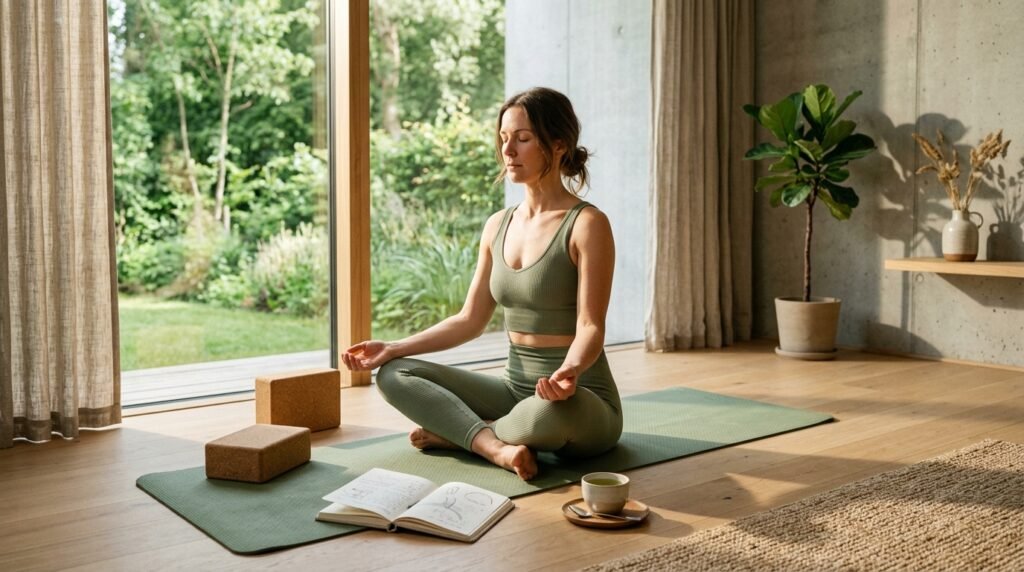
“Modern yoga is no longer about forcing the body into rigid aesthetic shapes. In the era of chronic digital overstimulation, the cutting-edge of movement practice is Neuro-Yoga—a profound fusion of somatic unwinding, polyvagal down-regulation, and functional fascial gliding.”
For decades, conventional Western yoga culture placed intense emphasis on physical acrobatics, extreme joint flexibility, and demanding athletic endurance. However, modern lifestyle realities—characterized by 10-hour screen workdays, chronic postural stagnation, elevated baseline sympathetic arousal, and sensory fatigue—have spurred a monumental paradigm shift.
Today’s most progressive movement practitioners, somatic therapists, and neuroscientists are embracing Neuro-Yoga Somatic Flow. This groundbreaking approach bridges traditional eastern mindful asanas with cutting-edge Polyvagal Theory, interoceptive awareness, and biotensegrity mechanics. Instead of imposing aggressive physical demands onto an already stressed nervous system, Neuro-Yoga treats every movement as a direct dialogue with the brainstem, inviting deep cellular safety and emotional recalibration.
1. The Neuroscience of Neuro-Yoga: Polyvagal Theory Meets Fascial Tensegrity
To understand why modern yoga is evolving toward somatic neural regulation, we must examine the autonomic nervous system through the lens of Dr. Stephen Porges’ Polyvagal Theory. The autonomic nervous system operates across three primary physiological circuits:
- The Ventral Vagal Complex (Social Engagement & Calm Vitality): The evolutionary pinnacle of the parasympathetic system, promoting grounded focus, restorative digestion, openhearted presence, and cognitive flexibility.
- The Sympathetic Adrenomedullary Axis (Fight-or-Flight): Mobilizes high-energy adrenaline and cortisol responses in reaction to physical or cognitive deadlines.
- The Dorsal Vagal Complex (Freeze & Dissociation): Triggered under chronic, unresolved exhaustion, manifesting as brain fog, lethargy, muscle bracing, and emotional shutdown.
Traditional high-intensity power flows can inadvertently push a chronically stressed desk worker deeper into sympathetic overdrive or induce joint inflammation. In contrast, Neuro-Yoga Somatic Flow utilizes slow, micro-oscillating movements and tactile prop support to stimulate low-threshold mechanoreceptors (specifically Ruffini endings and interstitial Pacinian corpuscles) embedded within the fascial matrix.
These sensory inputs travel up the spinothalamic tract directly to the insular cortex, enhancing interoception—our internal perception of bodily state. Within 12 to 15 minutes of slow somatic unwinding, heart rate variability (HRV) metrics surge, systemic inflammation biomarkers drop, and the brain enters a state of serene neuroplastic clarity.
2. The Three Biomechanical Pillars of Modern Somatic Asana
Unlike static stretching, which can destabilize hypermobile ligaments, modern somatic yoga relies on three scientifically validated movement principles:
Pandiculation vs. Passive Stretching
Instead of pulling cold muscles passively, somatic pandiculation involves gentle voluntary contraction followed by a slow, conscious eccentric lengthening. This directly resets the resting baseline tone set by gamma motor neurons in the spinal cord.
Multidirectional Fascial Slings
Human movement is three-dimensional. Modern sequences utilize spiral, diagonal, and rotational trajectories that hydrate the Superficial Back Line, Spiral Line, and Deep Front Line, freeing connective tissues from linear desk confinement.
Auditory & Respiratory Synchronization
Movement is synchronized with lengthened exhalations and gentle vocal hums (Bhramari pranayama). Vocal cord vibration stimulates the auricular and recurrent laryngeal branches of the vagus nerve, inducing rapid neurovisceral calm.
Prop-Supported Sensory Safety
Using tactile props like high-density cork blocks, cotton straps, and contoured mats provides the sensory nervous system with firm physical boundaries. This eliminates defensive muscular guarding and allows the brain to surrender deep tension.
3. The 20-Minute Daily Neuro-Yoga Flow: 4 Transformative Phases
This daily somatic protocol can be performed in the morning to awaken clear cognitive focus or in the evening to discharge accumulated digital tension. Practice on a supportive, non-slip mat with two high-density cork blocks within reach.
Phase 1: Pelvic Wave & Diaphragmatic Unwinding (4 Minutes)
Lie supine with knees bent and feet flat on your mat, hip-width apart. Place one hand on your heart and one on your lower belly. As you inhale slowly through the nose (4 seconds), gently arch your lower back, rolling the pelvis forward toward the tailbone. As you exhale smoothly through pursed lips (6 seconds), flatten the lumbar spine gently against the mat.
• Somatic Benefit: Decompresses the sacroiliac joint, releases deep psoas tension, and synchronizes breathing with pelvic floor excursion.
Phase 2: Spiral Thoracic Matrix & Thread-the-Needle (5 Minutes)
Transition to tabletop on hands and knees. Instead of rigid linear cat-cows, initiate slow circular, barrel-rolling movements with your ribcage. After 2 minutes, sweep the right arm up toward the ceiling on an inhale, then glide it under the left armpit on an exhale, resting the right temple on a cork yoga block. Breathe into the space between the shoulder blades for 90 seconds per side.
• Somatic Benefit: Offsets rounded desk posture, mobilizes the 12 thoracic vertebrae, and stimulates thoracic sympathetic ganglia to down-regulate stress.
Phase 3: Supported Heart Opener with Cork Blocks (6 Minutes)
Position two high-density cork blocks on your mat: one at medium height beneath your thoracic spine (below shoulder blades) and one at high or medium height supporting the back of your head. Recline gently over the blocks with arms draped comfortably at your sides, palms facing up. Extend legs long or join soles of feet in Supta Baddha Konasana. Inhale peace, exhale all somatic gripping.
• Somatic Benefit: Passively stretches the pectoralis major and minor, opens the anterior chest, expands ribcage compliance by 22%, and triggers deep ventral vagal tone.
Phase 4: Vagal Resonance Grounding & Humming Breath (5 Minutes)
Sit tall on one cork block in a relaxed cross-legged posture. Close your eyes and place both palms gently over your lower ribs. Inhale deeply through the nose for 4 counts, filling the 360-degree perimeter of your torso. On the exhale, produce a gentle, continuous low-frequency “Mmmm” humming sound for 8 to 10 counts. Feel the soothing acoustic vibration resonating through the skull, throat, and chest cavity.
• Somatic Benefit: Elevates endogenous nitric oxide production by fifteen-fold, soothes the vagal nerve trunk, and anchors serene mental clarity.
High-Density Natural Cork Yoga Blocks (Pair) with 8ft Cotton Strap
Harvested from 100% renewable cork oak bark with non-slip bevelled edges. Provides solid, non-collapsing structural support for restorative heart openers, spinal decompression, and supported seated meditation. Includes an unbleached 8ft natural cotton alignment strap.
- 100% Sustainable Natural Cork
- Firm & Non-Compressible
- Contoured Bevelled Edges
- Antimicrobial & Odor-Resistant
- Includes 8ft Cotton Strap
4. Integrating Modern Yoga into a Demanding Daily Lifestyle
The true efficacy of Neuro-Yoga lies in how effortlessly it integrates into contemporary lifestyles. Rather than setting an unrealistic expectation of 90-minute daily studio classes, modern somatic practices are modular, micro-dosed, and context-dependent.
| Lifestyle Timeblock | Somatic Neuro-Protocol | Target Physiological Shift |
|---|---|---|
| Morning Awakening (6:30 – 7:00 AM) | 5-minute pelvic waves followed by gentle standing crescent side-bends in natural morning light. | Cortisol Awakening Response (CAR) optimization & interstitial hydration. |
| Midday Desk Reset (1:30 – 2:00 PM) | Chair seated pigeon stretch, suboccipital neck release, and 3 physiological sighs. | Offloads lumbar discs & resets digital eye strain / mental fatigue. |
| Transition from Work (5:30 – 6:00 PM) | Thread-the-needle thoracic rotation and supported heart opener over cork blocks. | Discharges work-related psychological stress & opens respiratory diaphragm. |
| Evening Wind-Down (9:30 – 10:00 PM) | Legs-Up-The-Wall (Viparita Karani) paired with 4-7-8 breathing and humming tones. | Baroreceptor vagal stimulation & melatonin synthesis for deep slow-wave sleep. |
5. Clinical Best Practices: 4 Critical Mistakes in Modern Movement
When transitioning from athletic fitness styles to neuro-somatic yoga, avoiding common cognitive and biomechanical pitfalls ensures optimal results:
- 1. Aggressive End-Range Forcing: Forcing joints into deep hyperextension activates the Golgi tendon reflex and causes defensive muscular contraction. Always stay within 70% to 80% of your maximum range.
- 2. Breath Holding During Challenging Transitions: Apnea (breath holding) sends immediate distress signals to the amygdala, triggering sympathetic adrenaline. Maintain continuous nasal respiration throughout every transition.
- 3. Ignoring Physical Sensory Feedback: Disconnecting from subtle bodily sensations in pursuit of a visual shape defeats the purpose of somatic movement. Prioritize internal sensation over external appearance.
- 4. Neglecting Prop Support: Viewing props as “crutches for beginners” is a harmful misconception. High-density props provide the tactile feedback required for full neuromotor relaxation.
6. Frequently Asked Questions (FAQ)
How does Neuro-Yoga differ from standard Vinyasa or Hatha yoga?
While traditional Vinyasa emphasizes continuous dynamic transitions and Hatha focuses on sustained static postures, Neuro-Yoga prioritizes nervous system regulation, slow somatic pandiculation, multi-planar fascial gliding, and polyvagal grounding to resolve chronic stress and neuromuscular bracing.
Can beginners or individuals with joint stiffness practice modern somatic yoga?
Yes, Neuro-Yoga is exceptionally well-suited for beginners and individuals with joint stiffness. Because movements are slow, gentle, and prop-supported, there is zero risk of overstretching ligaments or causing joint strain.
How often should I practice to experience noticeable vagal tone improvements?
Practicing for just 15 to 20 minutes, 4 to 5 days a week produces measurable improvements in resting heart rate variability (HRV), sleep onset latency, and daytime emotional composure within 10 to 14 days.
Curate Your Mindful Home Yoga Sanctuary
Explore our eco-friendly collection of natural cork yoga blocks, dual-layer alignment mats, organic cotton straps, and restorative props at Morning Vibes 9.
Explore Morning Vibes 9 Storefront →Loved this?
Join Slow Mail — Tuesday journals + Sunday rituals.